Car keys · Doon
Motorcycle & Scooter Keys in Doon
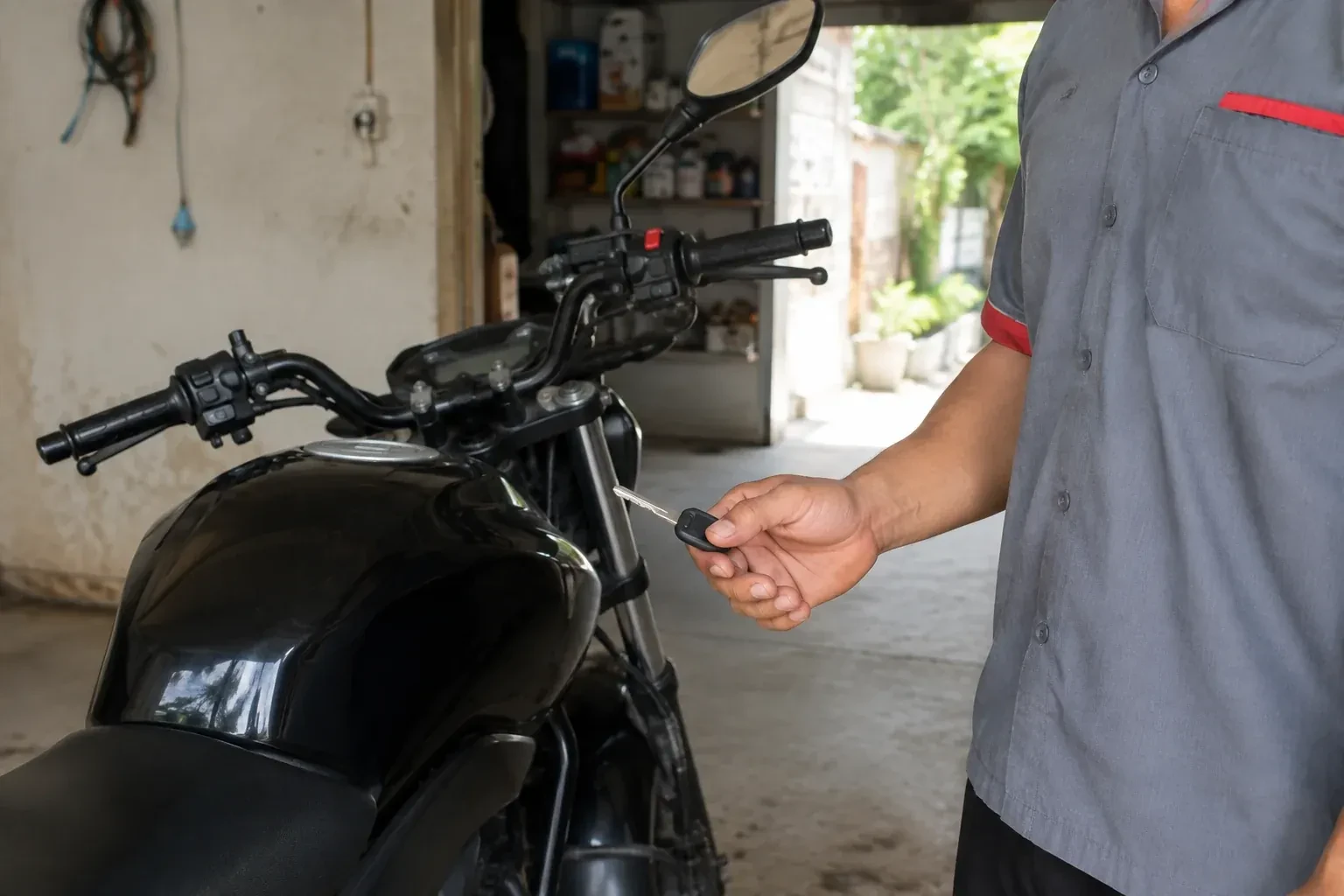
The bike came home from its previous owner with a single worn key that starts the engine but does nothing for the seat latch or the fuel cap, both of which answer to keys nobody handed over.
In plain words
Locks that sit through a season of outdoor storage or freeze-thaw weather often need more than a fresh key. A steering-head lock that has seized is diagnosed first, then freed with the cleaning method its maker directs and gentle working of the mechanism rather than force on the key, since a harder twist is more likely to snap a blade than move a stuck lock. Once the lock turns freely, cutting or duplicating the key proceeds the normal way, and a season's worth of grit is cleaned out of the mechanism at the same time.
How the visit goesThe key still opens the seat and unlocks the fork, but at the ignition it needs a slow half-turn and a small lift before the switch engages, a habit that has crept in over years of daily starts.
Motorcycle & Scooter Keys
How the visit goes
Mapping every lock on the machine
A motorcycle rarely has just one lock, so the locksmith walks around it noting the ignition and steering, the seat latch, a fuel cap on older models, and any storage compartment, top case or helmet lock fitted afterward. Each is checked against whichever key the owner has, since it is common for one or two of them to already share a cut while another was left on its own from the factory or a previous repair. Knowing the full list before starting means the finished key set covers every lock the owner actually wants, not just the one that prompted the call.
Cutting from an existing key
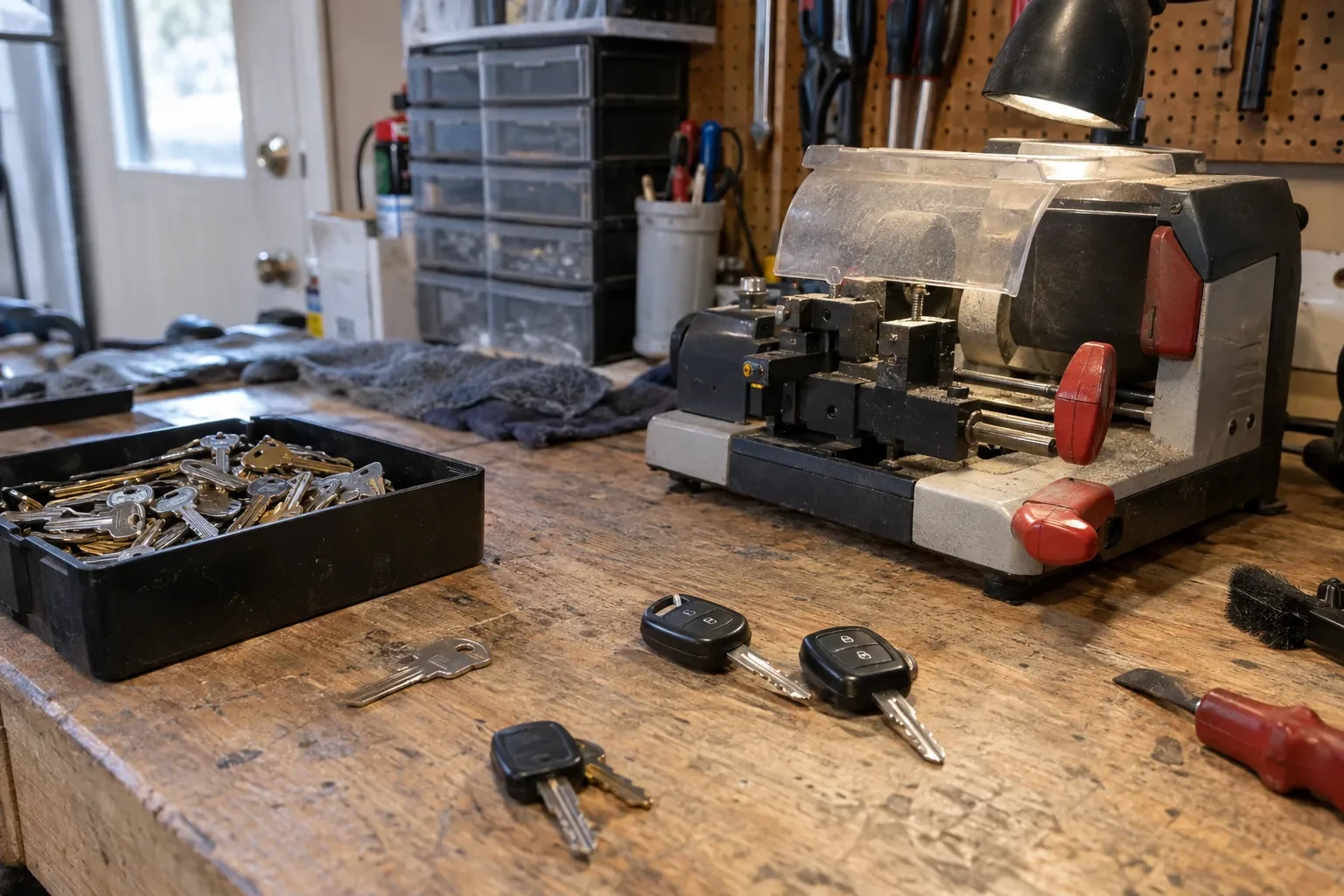
When a working key exists, even a spare or a worn original, the more direct route is to read its cuts on a code machine or trace them by hand and cut a fresh blank to match. The new key is checked against the old one under a light before it goes anywhere near the ignition, since a slight misread shows up as a key that almost turns but does not quite lift every wafer. Cutting from a known key is usually the shorter part of the visit, leaving more time for any other locks that need the same treatment.
A record worth keeping
A short written note of what was done, whether the lock was cut from an existing key, decoded from scratch, or paired as a new transponder, is worth keeping with the machine's other paperwork. It answers a question that often comes up later: whether a particular key is original or a replacement, and whether other locks on the bike were brought onto the same cut. For a machine that changes hands again down the road, that note saves the next owner from starting the same process from a single worn key and no history.
Motorcycle & Scooter Keys
In the van
Pick and tension tools
Torx and security bits
Penetrating fluid
Motorcycle key blanks
Wafer lock decoder
Motorcycle & Scooter Keys
What affects the quote
Number of new keys cut
Keys cut on site are counted individually. Two for a rider and a partner, or several for a household that shares the machine, is reflected directly in the total.
Condition of the steering lock
A steering lock that turns freely adds little to the visit. One that has seized from weather or disuse needs patient freeing before any key can be tested against it, which takes extra time.
Make, model and age of the machine
Make, model and age decide how common the keyway and blank are. A widely used platform is usually the more straightforward case; an uncommon or older machine can take longer to source parts for.
What to have ready
- Would you like every lock brought onto one key?
- Where is the machine currently kept?
- Do you have a key already, even one that works poorly?
Motorcycle & Scooter Keys: questions
QuestionsDo you need the vehicle's VIN to make a key?
It helps but is not always required. The VIN can confirm the exact model and sometimes points to a factory key code on file, which speeds up cutting a key without reading the lock from scratch. Where the VIN is not available or does not lead anywhere useful, the locksmith works directly from the lock or an existing key instead, so a missing VIN slows the process rather than stopping it.
How do you tell if it is the transponder chip or just a dead battery?
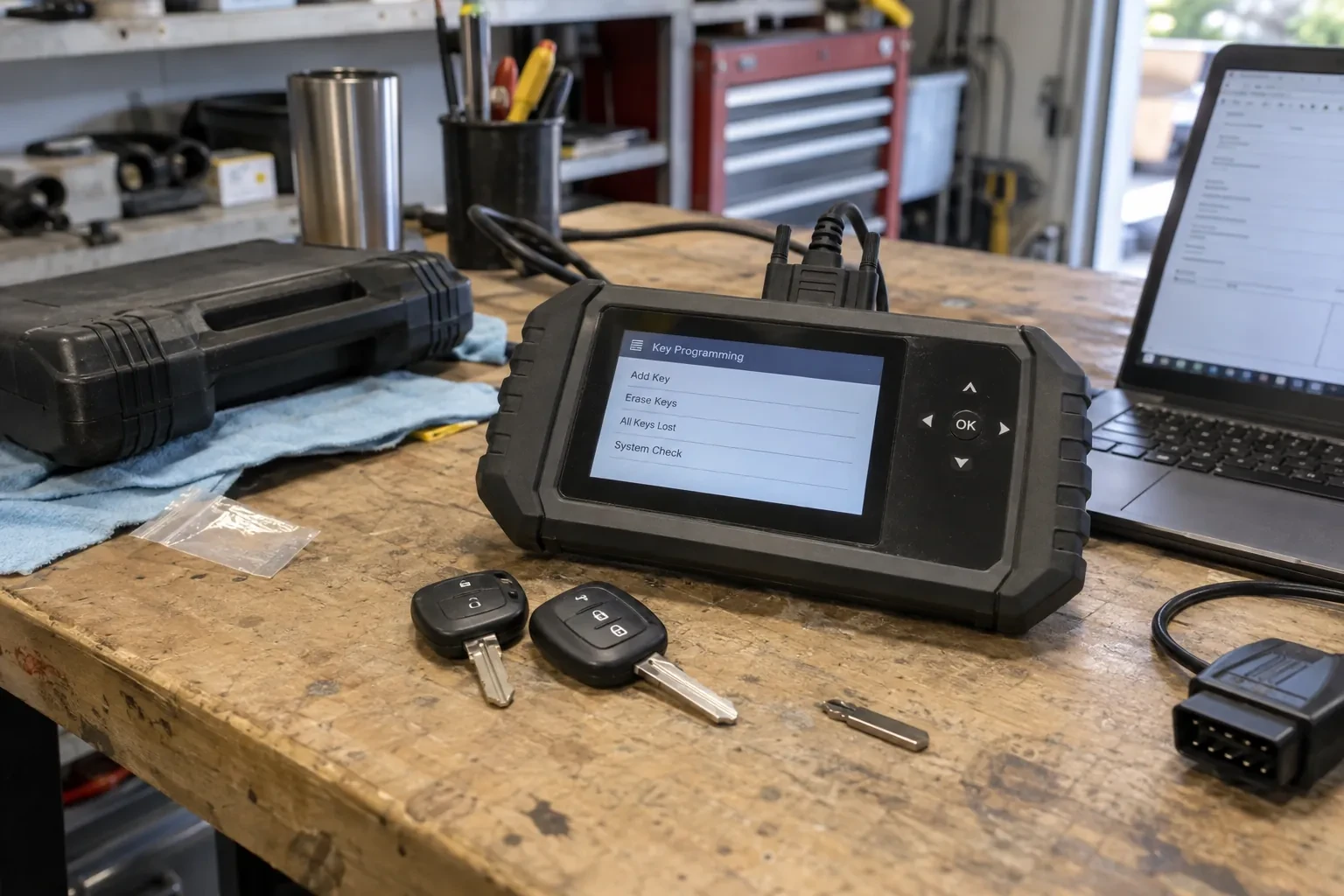
Where the key itself holds a battery, such as a fob-style key, a simple battery swap is tried first and is the more common explanation for a dead-seeming key. Where the chip sits in a passive key with no battery of its own, the locksmith checks whether the ignition recognises the chip at all using diagnostic equipment, which distinguishes a genuinely failed or unpaired chip from an unrelated electrical fault elsewhere on the machine.
Can a scooter's under-seat or helmet-box lock be brought onto the ignition key?
On many serviceable, compatible locks, yes, using the same rekeying approach used for a seat or fuel cap lock: the storage lock is opened, its wafers replaced to match the ignition's combination, and the result tested with the finished key. Some helmet locks are simpler mechanisms than a full wafer lock, in which case the locksmith checks first whether it can accept a matching cut at all before promising an outcome.
Related services
- Car Key ReplacementYou bought the car privately and it came with a single key on a shoelace.
- Spare Car Key DuplicationA teenager just passed a driving test and reasonably wants a key of their own rather than negotiating over the family's single copy every time the car is needed.
- Key Fob ProgrammingEvery fob for the car disappeared at once inside a bag that was never recovered, and the vehicle now sits in the driveway with no way in and no way to start it.