Change or rekey · Doon
Vintage Mortise Lock Service in Doon
After a wet summer the entry door sits lower in its frame.
In plain words
Interior doors are as much a part of this work as the entry. Bedroom, bathroom and closet doors in an older home usually carry a lighter mortise latch with a privacy turn button, and after decades without lubrication they stop catching or the turn button seizes. These small cases are short jobs on the bench: a clean, a spring, a new turn button spindle where the old one has sheared. Sets of interior locks are often serviced in one visit, and a bit key can be cut that operates all of them, which is how they were originally supplied when the house was built.
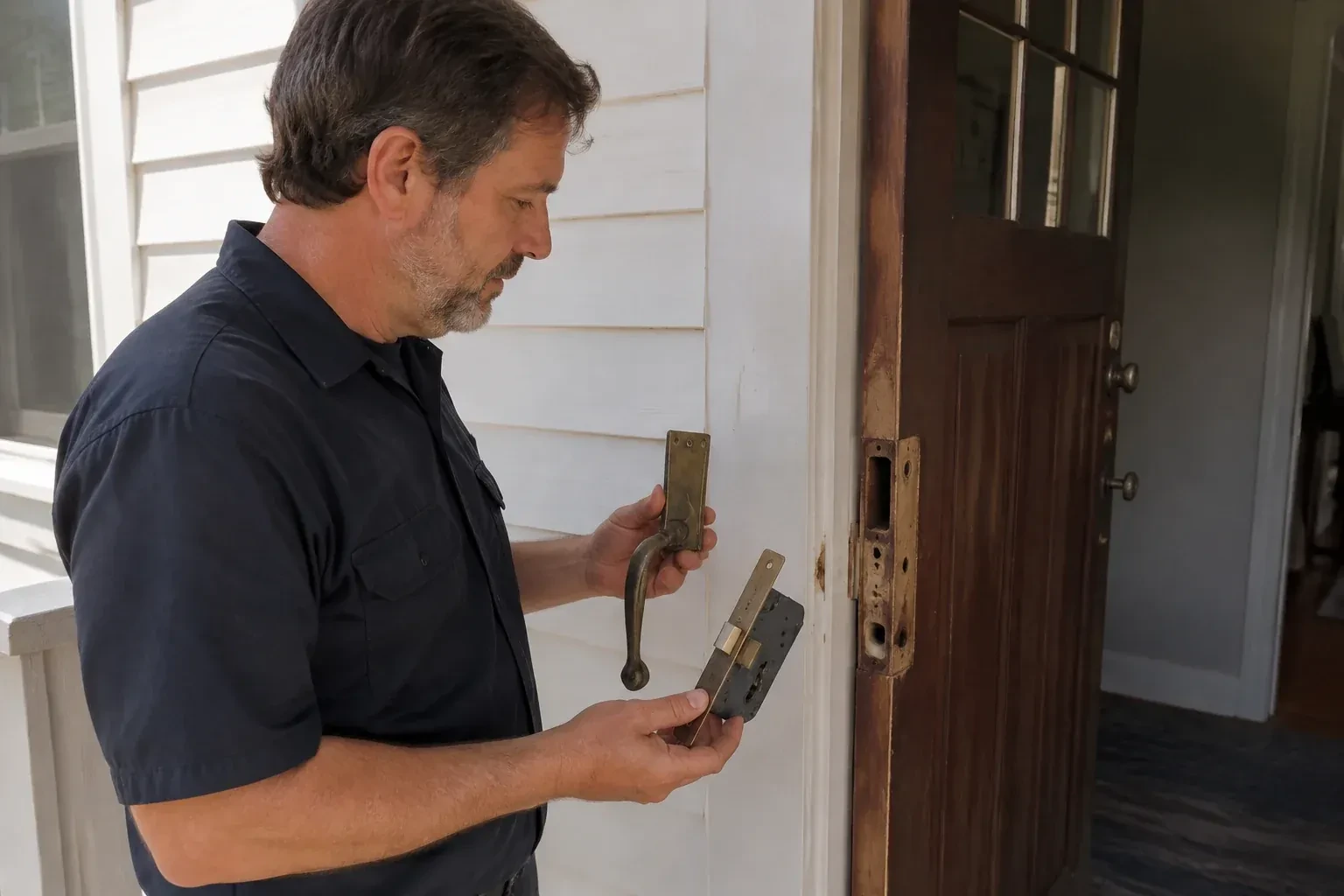
How the visit goesThe brass knob on the front door of your century home turns, but nothing happens on the other side. The latch stays tucked in, the door swings free, and the only thing holding it shut is the deadbolt and a bit key that has worn down to a nub.
Vintage Mortise Lock Service
How the visit goes
The door before the lock
Before blaming a lock that may be perfectly sound, the locksmith looks at the door. With it open, the lock is cycled; with it closed, the latch and deadbolt are tried again. A lock that works open and fights when shut is telling you the door has moved. The gap around the door is checked top to bottom, the hinges are watched for a sag when the door is lifted, and the strike plate is inspected for bright wear marks where the bolt has been scraping past. In an older home with a solid wood door this is a routine finding, and correcting it is often most of the repair.
When a case is fitted new
If the old case could not be saved, the replacement is fitted to the door rather than the door to the replacement. A reproduction or modern mortise case matching the measured height, depth, backset, faceplate and hub is chosen with the goal of it dropping into the existing pocket; where a small difference remains, the pocket is trimmed with a chisel by the least amount that works, never bored out. The original knobs, escutcheons and strike are refitted wherever their spacing allows, and a new cylinder is keyed to match the rest of the house if wanted. The result reads as the original lock from either side of the door, with the reliability of a fresh mechanism.
Parts, records and the house file
Anything that came out of the lock, a broken spring, a worn lever, the old cylinder, is offered to you rather than thrown away; some owners keep the originals with the house's papers. The locksmith leaves a short account of what was done: the case type and size, what was replaced, whether keys were made or a cylinder rekeyed, and how the strike was adjusted. For a designated heritage property this record shows the original hardware was retained. For everyone else it is simply the sheet you hand to the next locksmith, or the next owner, so nobody has to rediscover what is inside the door.
Vintage Mortise Lock Service
In the van
Spindle and knob set screws
Light lock oil
Dry graphite or PTFE lubricant
Hub followers and lever packs
Mortise cylinder and cam
Vintage Mortise Lock Service
What affects the quote
Paint and seized parts
Hardware buried under decades of paint takes time to free and clean without damage. A faceplate, strike and thumb-turn that have to be stripped back add to the visit and are noted in the quote.
Number of locks in the visit
One entry lock is the simplest case. A whole floor of interior latches, or the front and back doors together, is a longer visit, and each case is quoted on its own so the total is easy to follow.
Replacement cylinder
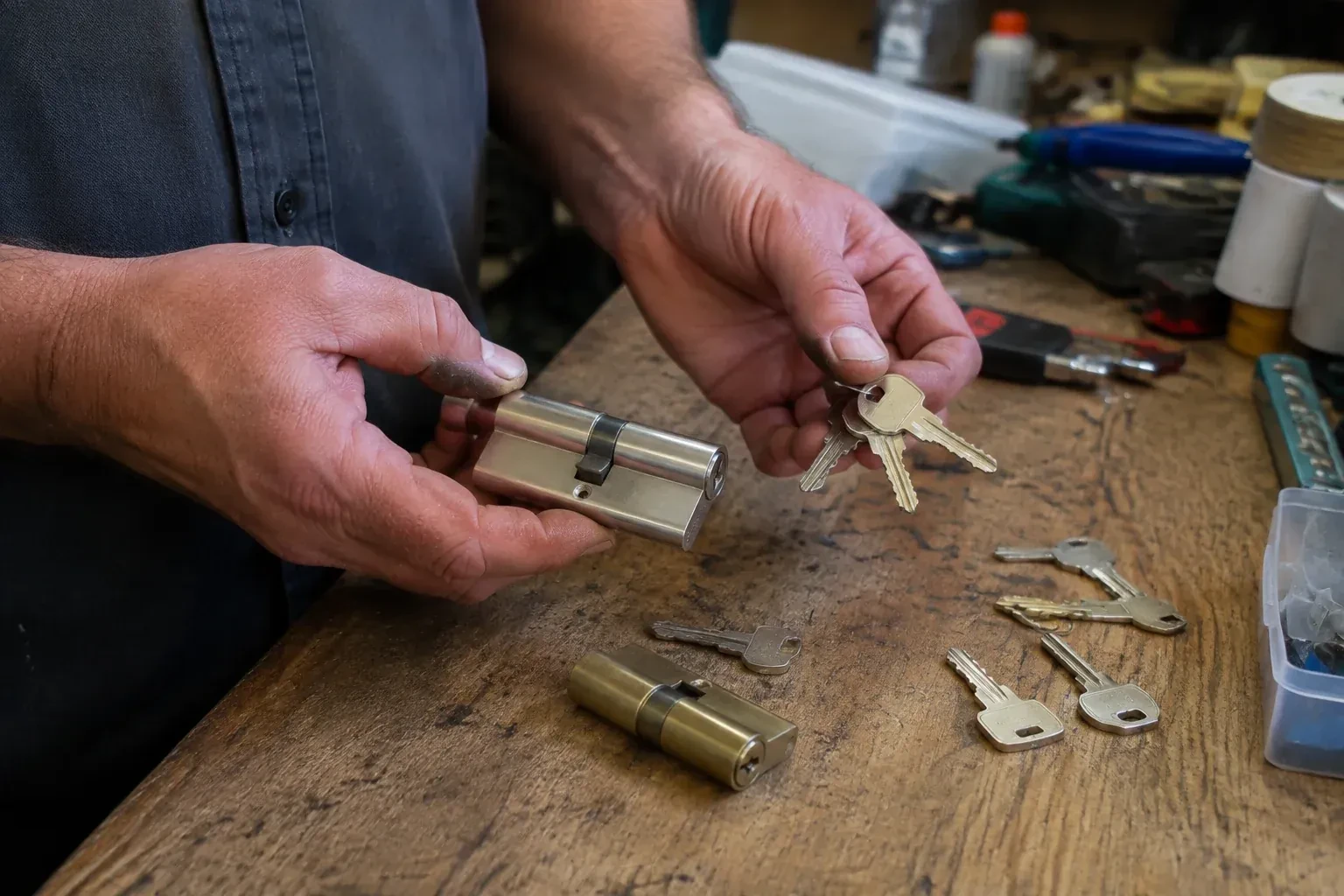
When a pin-tumbler cylinder is past rekeying, a new mortise cylinder of the right thread and cam is fitted. A standard cylinder and a high-security one are different hardware and are quoted as such.
What to have ready
- Is the property designated as a heritage building?
- Is the deadbolt keyed from the inside as well as the outside?
- What does the knob do when you turn it: return, sag, or not come back?
Vintage Mortise Lock Service: questions
QuestionsCan you make a key for a lock that has none?
Yes. A bit key is cut to the lock rather than copied from another key: the locksmith chooses a blank of the right size and files the bit until it clears the wards and lifts the levers inside your case, testing as they go. A pin-tumbler cylinder on a later lock is decoded or rekeyed and keys cut to it. Bring any loose keys that came with the house, since one may be close enough to serve as a starting pattern.
What do I get at the end of the visit?
A lock you have tested yourself from both sides, keys counted into your hand with a spare, any parts that were removed if you want them, and a short written note of what was done: case type, parts replaced, keys made, strike adjusted. For a bit-key lock the locksmith keeps the details needed to cut further keys later. You also get shown where the yearly drop of oil goes.
Can you match a missing knob, plate or thumb-turn?
Often, yes. Locksmiths who work on older hardware keep salvage and reproduction trim in the common patterns and finishes, and a knob, rosette or escutcheon can usually be found close enough that the pair on one door match. Where nothing suitable exists, the trim from a less visible door can be moved to the entry and the reproduction fitted where it is seen less. Bring or photograph the surviving piece so it can be matched.
Related services
- Deadbolt InstallationThe bolt on the front door is keyed on both sides.
- Lock Replacement & UpgradeThe lever on the side door droops toward the floor and rattles in your hand.
- Smart Lock InstallationThe rental turns over every few months and each time you drive across town to swap keys, then wonder whether copies were made.