Locksmith
Practical advice
Winter, humidity, house settling and plain old wear all leave their marks on locks. The advice here helps you tell normal ageing from a real problem, and it explains what you can safely do yourself and where a professional hand is worth having.
Frequently asked questions
What if my wallet and every document are locked inside?
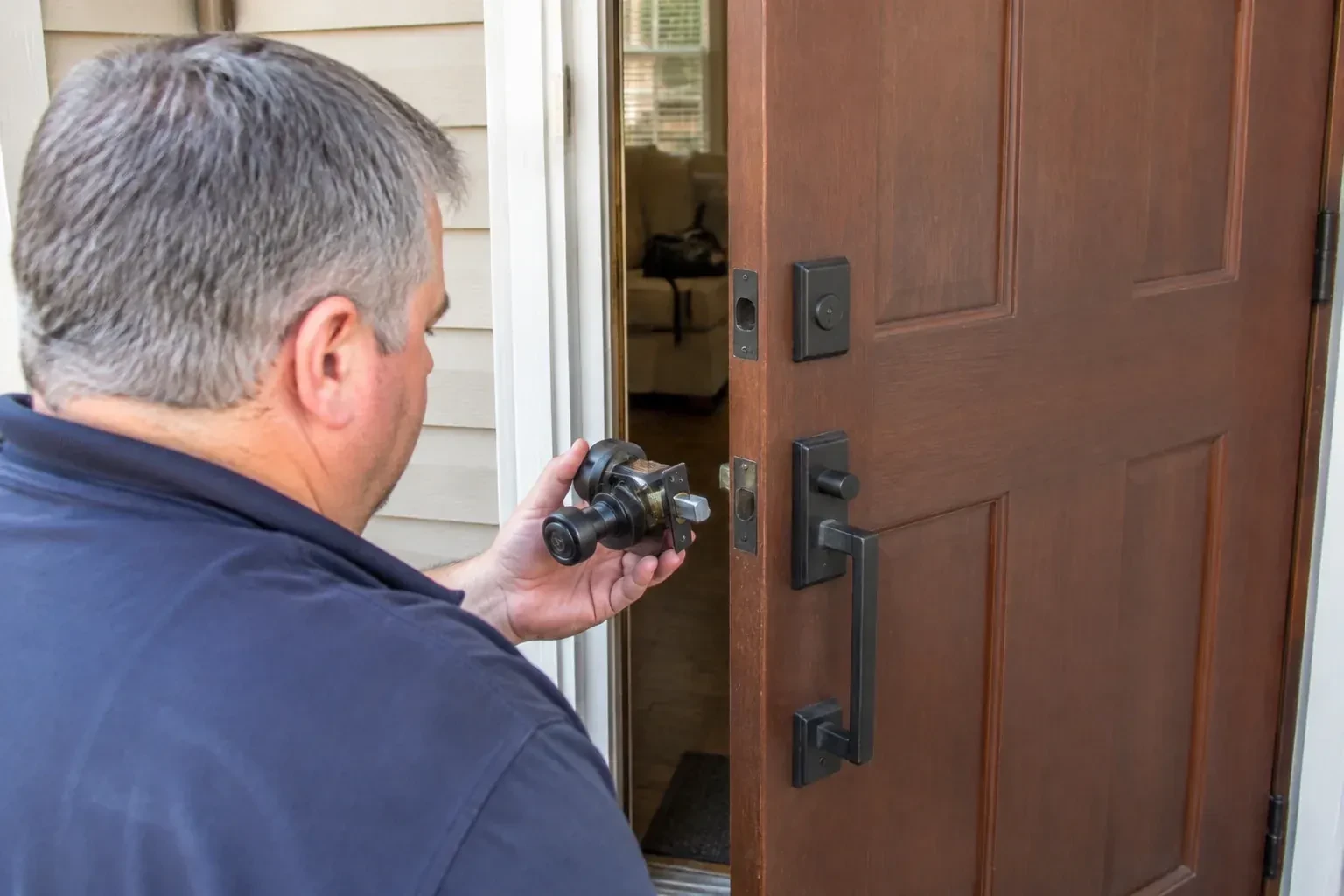
That is the most common version of a lockout, and there is a routine for it. Tell the locksmith on the phone so the plan is agreed before arrival. Often a neighbour can confirm you live there, a digital copy of a lease or bill is on your phone, or a property manager can vouch for you. Where none of that is available, the locksmith opens the door and completes the identification check with the documents inside before leaving.
We need to open for customers. How do you sequence the visit?
Entry comes first and repairs second. Once authority is confirmed the door is opened, staff go in and start their routine, and the locksmith turns to the cause: extracting a broken key, rekeying for a lost one, re-springing a deadlatch or lifting a dropped door. Anything that can wait for a quieter hour, such as rekeying interior doors, is offered as a return visit so the shop floor is not blocked while it trades.
Can the piece be pushed out from the other side?
On a standard door cylinder the keyway is closed at the back by the plug and the tailpiece, so there is no straight path through. What a locksmith can do is remove the cylinder, take off the cap, and push the plug out of its housing with a follower, which frees the fragment from behind. That is done on the bench, not by forcing anything from the inside of the door.
Someone reached through the sidelight to turn the thumb-turn. Should I fit a deadbolt keyed on both sides?
It is tempting, but a thumb-turn lets everyone in the household leave by that door without hunting for a key, special device or special knowledge, so a keyed inside cylinder is the wrong fix. Better answers are a tested security-film system or laminated glass in the sidelight to slow an arm from passing, moving the deadbolt beyond arm's reach of the glass where the door allows, and a glass-break sensor if you have an alarm.
Should I spray something into the keyway while I wait?
Better not, unless it is a proper dry lock lubricant. Household oils, general penetrating sprays and hinge silicone thicken inside the cylinder and attract grit, so they buy a day and cost a service later. If the lock is frozen, a lock de-icer is fine; boiling water is not, since it refreezes deeper in. The most useful thing to do while waiting is to stop turning the key, so it does not bend or snap.
I live in a condominium. Which locks are mine to rekey?
Your suite door is generally the one you can act on, and it may sit on a building master system, so the locksmith plans the rekey so the master still operates while the old change key stops working. Lobby doors, the parking gate, amenity rooms and the mailroom belong to the corporation; report a lost fob or key for those to the property manager, who deactivates or reissues it. The locksmith can help sort which is which.
One of my locks is stiff and worn. Can it still be rekeyed?
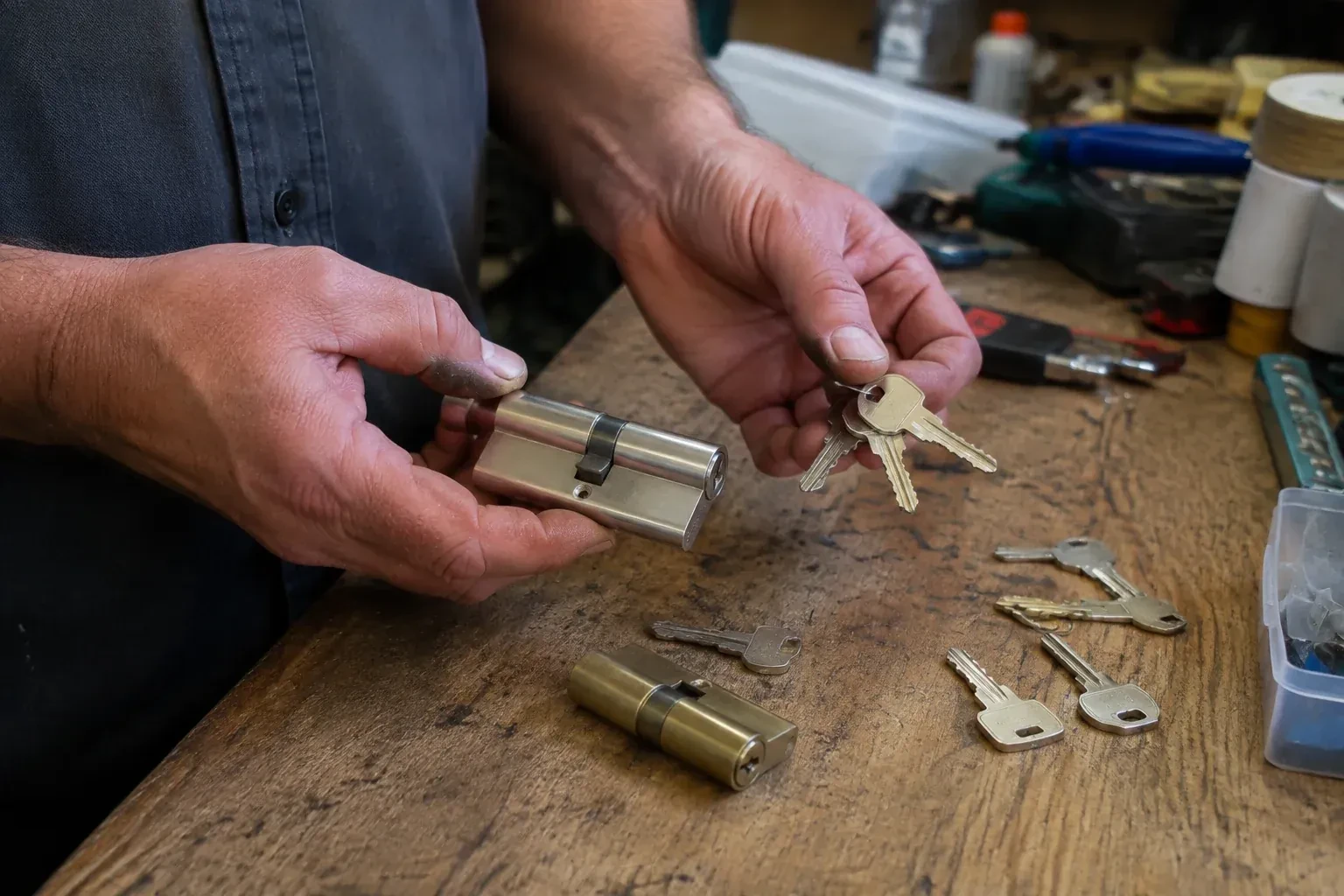
Often the stiffness is grit, old oil and tired springs rather than real wear, and those are handled while the cylinder is on the bench: the plug is cleaned, new springs go in with the new pins, and a dry lubricant finishes it. If the plug has worn oval or the housing is damaged, the locksmith shows you and suggests a replacement cylinder pinned to the same key, rather than fresh pins in a lock that will keep dragging.
Does the finish of the deadbolt matter beyond looks?
It does on an exposed door. Winter salt spray, summer sun and humid air all work on the outside trim, and residential deadbolts carry a finish grade that reflects how well the coating resists them. A lifetime or PVD-style finish stays bright longer on a south-facing or roadside door, while a sheltered porch door can carry any finish you like. Matching the knob or lever below is mostly a matter of taste.
Can the same visit replace locks on more than one door, or does each door need its own appointment?
One visit usually covers every door on the job. The locksmith brings a range of cylinders and strikes, measures each door's backset and bore, and works through the list in order, front entrance first if a key change matters most there. Having a rough list ready, which doors, and whether they should end up on one key or several, lets the locksmith plan hardware before arriving rather than working it out door by door on site.
Can you make a key for a lock that has none?
Yes. A bit key is cut to the lock rather than copied from another key: the locksmith chooses a blank of the right size and files the bit until it clears the wards and lifts the levers inside your case, testing as they go. A pin-tumbler cylinder on a later lock is decoded or rekeyed and keys cut to it. Bring any loose keys that came with the house, since one may be close enough to serve as a starting pattern.
What is the difference between a keypad lock, a Bluetooth lock and a Wi-Fi lock?
A keypad lock is operated at the door by code and needs no phone at all. A Bluetooth lock adds phone control when you are within a few metres, which covers most daily use and keeps the lock off the internet. A Wi-Fi lock, either built in or through a small bridge, lets you check and change the lock from anywhere and sends alerts, at the cost of more battery use and a dependence on the home network. Many models combine two of these.
What information over the phone helps identify the hardware before the visit?
A photo of the lock, the gate or the entry door, taken from a few steps back and up close on the cylinder, tells the locksmith more than a verbal description usually can. Mentioning whether the gate is wood, metal or vinyl, roughly how the property is laid out, and whether the entry has any buzzer, keypad or electric component narrows down what hardware and parts to bring. None of this is required, but it does shape what shows up in the van.
How do I know what brand or type of lock is on my mailbox?
You generally do not need to; identifying the hardware is part of the visit. The locksmith reads the maker's mark on the lock face, measures the cylinder and cam, and checks the hole pattern in the compartment door, which together point to a matching replacement even when the original brand is no longer sold.
Do drop safes or under-counter cash safes work the same way as a larger floor safe?
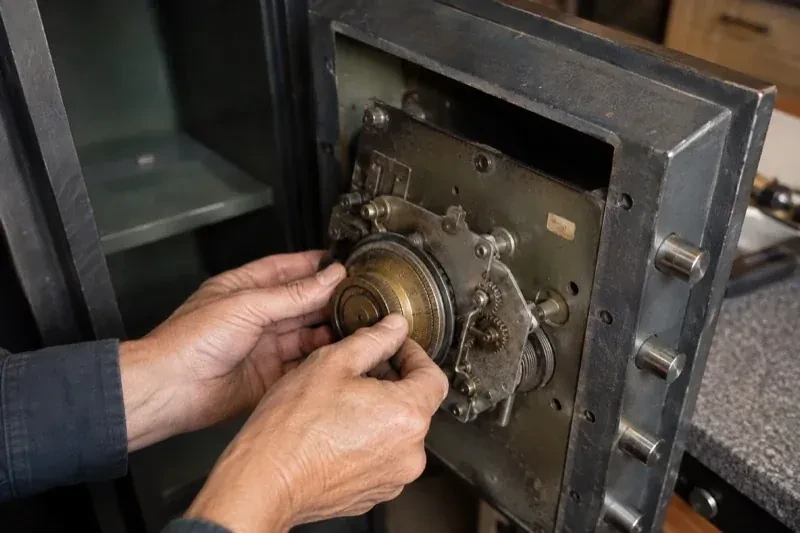
The identification step is the same regardless of size, but the lock inside is not assumed from the safe's size: a small drop safe or under-counter unit can carry anything from a basic keypad to a high-security lock, so each is identified on its own before manipulation, reset or a combination change proceeds, with the same care around authority and aftercare applying equally.
What kind of floor can a safe be anchored to?
Solid concrete is the most straightforward surface, taking a masonry anchor bolt directly. A wood subfloor works too, provided the anchoring reaches into the floor joists beneath the surface layer rather than just the plywood or the flooring on top. Tile is the awkward case, since a bolt through it tends to crack the surrounding tiles, and an alternative anchoring point or a different spot in the room is usually the better route there.
Why does the locksmith care so much about the strike plate?
Because that is where a kicked door fails. The bolt is strong, but it sits in a pocket in the jamb held by a thin plate and short screws, and a boot splits the wood around it. A reinforced strike or box strike fastened with three-inch screws into the wall framing spreads the blow along the frame. It is the least visible part of the upgrade and often the one that does the most.
How do you confirm I am allowed to have the locks changed?
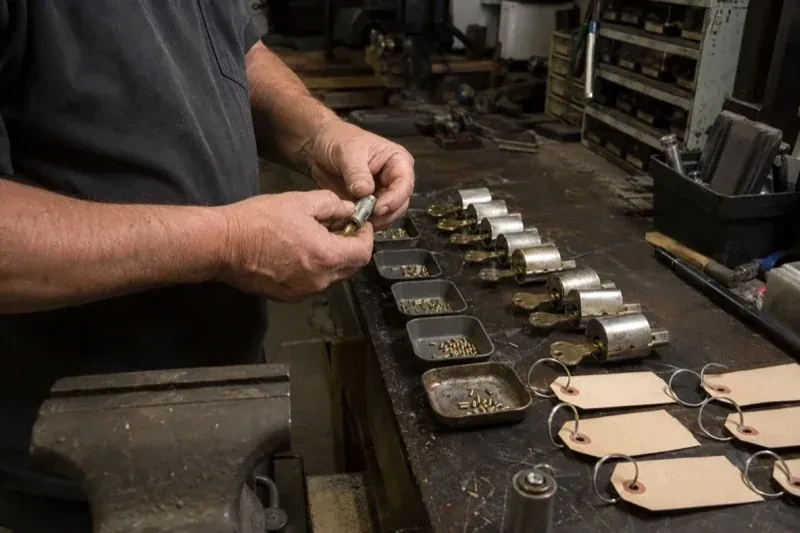
For a business the locksmith looks for someone with standing: the owner, a director, or a manager who can show written authority from one of them. A lease, a business registration or a letter on company paper usually settles it, along with photo identification. Where doors belong to a landlord, the property manager's approval is asked for as well. This is a short step and it protects the business from having its own locks changed by the wrong person.
How do you decide how many sub-master levels a business actually needs?
The number follows the organization, not a preference for tidy diagrams. Genuinely distinct groups, such as separate departments or floors with different access needs, each justify a level; access differences that exist only on paper usually do not. A hierarchy with more levels than the business uses in practice is harder to administer without making anyone's day-to-day access meaningfully better.
How do you decide where the readers and door hardware physically go?
A short walk-through maps which doors get used most, where wiring can run cleanly, and where a reader sits at a comfortable reach for everyone, including anyone using a wheelchair or a cart. Door swing and nearby glass affect where a strike or a magnetic lock sits, and mounting height gets checked against the existing door hardware so nothing interferes with the handle or closer. That walk-through happens before ordering hardware so the layout matches the building rather than the other way around.
How high should the crossbar or touchpad be mounted?
Exit-device makers publish a mounting range for their own models, and in practice a crossbar or touchpad sits no higher than about 1200 mm above the finished floor. The locksmith sets the hardware inside the maker's range and below that ceiling, allowing for anyone in the space who needs a lower reach, a wheelchair user or a shorter staff member among them.
Can several branch locations be brought onto one master key system?
Yes, and it is a common request from businesses running more than one location. The locksmith works out a keying structure, a master for management, sub-masters per site or department, and individual change keys, then supplies cylinders across the locations that accept that structure. Keeping a record of the whole structure in one place is what makes it manageable afterward.
Can you open a pickup, a motorcycle, a trailer or a motorhome?
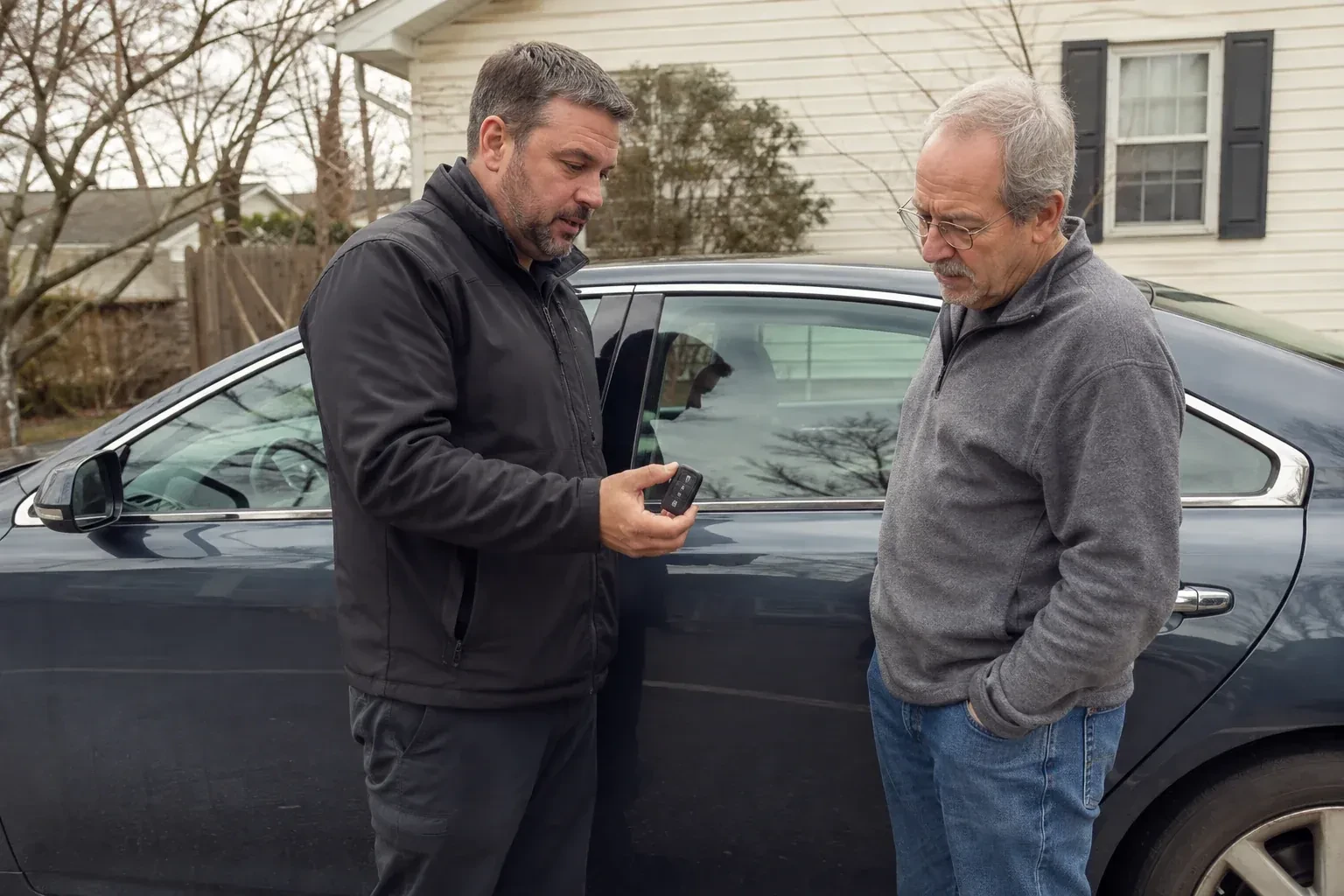
Yes. Trucks and vans often have a separate cargo or tailgate lock, motorhomes use household-style cylinders on their living-space doors, trailers and hitch locks are padlock-type hardware, and motorcycle seat and steering locks are small wafer cylinders. Say what the vehicle is when you call so the right picks and blanks are in the van, and expect the same authorisation check for each.
What is a transponder key, and does my car have one?
A transponder is a small chip in the head of the key with no battery of its own. When the key is in the ignition, or the fob is inside the cabin, the immobilizer sends a signal and the chip answers with a code; if the code is unknown, the engine is prevented from running. Every new light vehicle sold in Canada since September 2007 has been required to have an immobilizer, so almost any car from that time on uses one.
Does the new key need to be identical to the original?
Not necessarily. Most households want a spare that behaves exactly like the first key, and that is the default. Some prefer a simpler version for a particular driver, such as a mechanical key without remote buttons for a valet or a young driver. Either choice is a programming decision made at the start of the visit, and the resulting key is fully recognized by the vehicle either way.
Does key fob programming include cutting a mechanical key?
It can. Most proximity fobs hide a small mechanical blade inside the case for the day the battery dies or the electronics fail, and that blade is cut separately from the programming procedure, either to the vehicle's original code or matched to an existing working key. If your replacement fob arrived without a cut blade, mention it so the visit includes cutting one.
I just bought a used vehicle with one key. What should I do first?
Arrange a second key while the first one is still working, since it costs far less time and trouble than doing the same thing after that single key is lost or damaged. It is also a reasonable moment to confirm exactly how many keys the vehicle's system currently recognizes, especially if the previous owner cannot say for certain.
My key turns but the engine doesn't crank. Is that an ignition lock problem?
It can be, but it can also point past the lock entirely, toward the electronic immobilizer, the transponder chip in the key, or wiring behind the switch. The locksmith checks whether the barrel itself moves cleanly through every position first. If it does, and the vehicle still stays silent, the electronic side is one possibility among several, alongside the battery, starter and park/neutral circuit, so the cause is diagnosed rather than assumed.
Can a damaged weatherstrip really affect the lock itself?
Yes. A perished or torn seal around a door or hatch lets rain and winter brine reach the cylinder, the linkage and the wiring behind the panel, and repeated exposure is one of the more common reasons a lock that used to work smoothly starts sticking or failing.
Do you need the vehicle's VIN to make a key?
It helps but is not always required. The VIN can confirm the exact model and sometimes points to a factory key code on file, which speeds up cutting a key without reading the lock from scratch. Where the VIN is not available or does not lead anywhere useful, the locksmith works directly from the lock or an existing key instead, so a missing VIN slows the process rather than stopping it.