Change or rekey · Kitchener
Smart Lock Installation
The rental turns over every few months and each time you drive across town to swap keys, then wonder whether copies were made.
In plain words
For a landlord, a host or anyone who shares a door with people who come and go, the appeal is control without key cutting. Each tenant, guest, cleaner or contractor gets a code of their own, with a start and end date where the model allows, and removing someone takes seconds instead of a trip across town. The installation includes setting up that structure: an owner account, a small register of who holds what, and a routine for retiring codes at turnover. In a rented home the change is agreed with the tenant or landlord first, since both sides need a working way in.
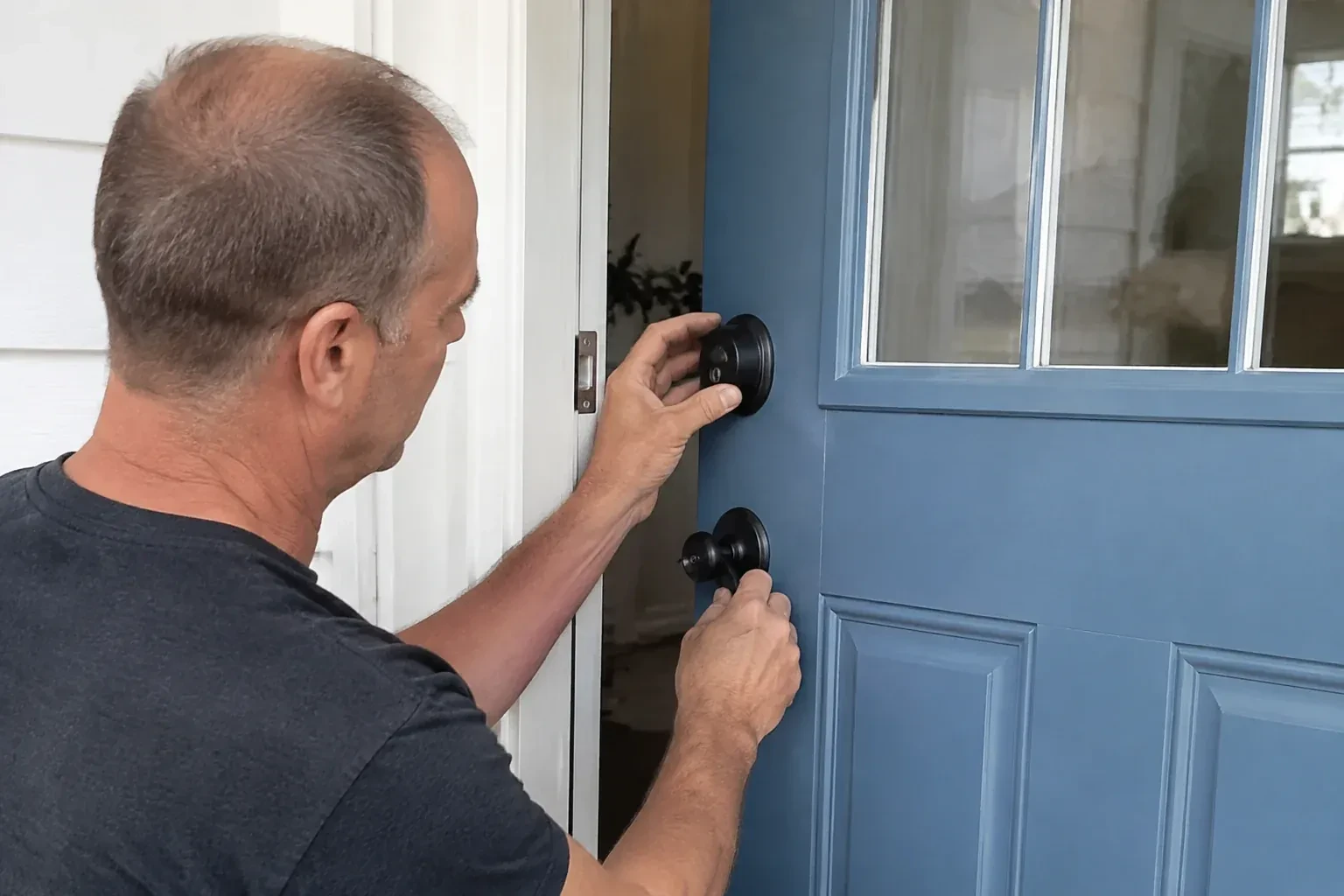
How the visit goesThe deadbolt is a stiff double-cylinder model that needs a key from both sides, and in the dark hallway finding it is a nuisance. You want a thumb-turn inside, a keypad outside, and a door that locks itself behind you.
Smart Lock Installation
How the visit goes
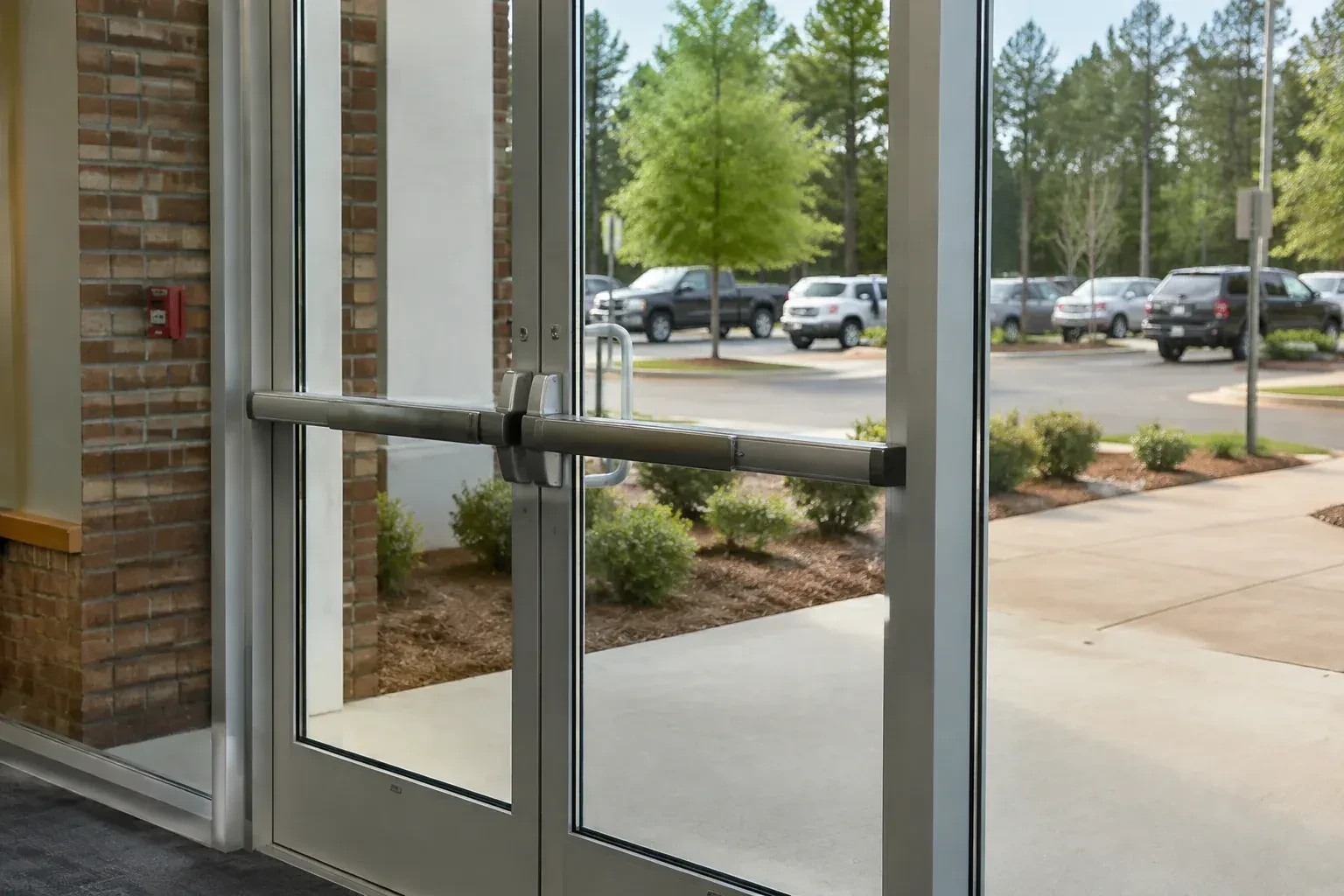
Storm doors, sun and weather on the entrance
The outside of the lock lives in the weather, so the locksmith looks at what the entrance throws at it. A storm door with full glass can turn the space between the doors into an oven on a July afternoon, and electronics have a temperature ceiling; a vented storm door or a model rated for that exposure solves it. A keypad that faces prevailing wind collects driving snow and freezing rain, which argues for a covered entry or a lock with a shielded touch surface. Salt spray from a nearby driveway attacks finishes over time. None of these rule out a smart lock; they steer the choice of model, finish and mounting.
Power up and teach the lock its door
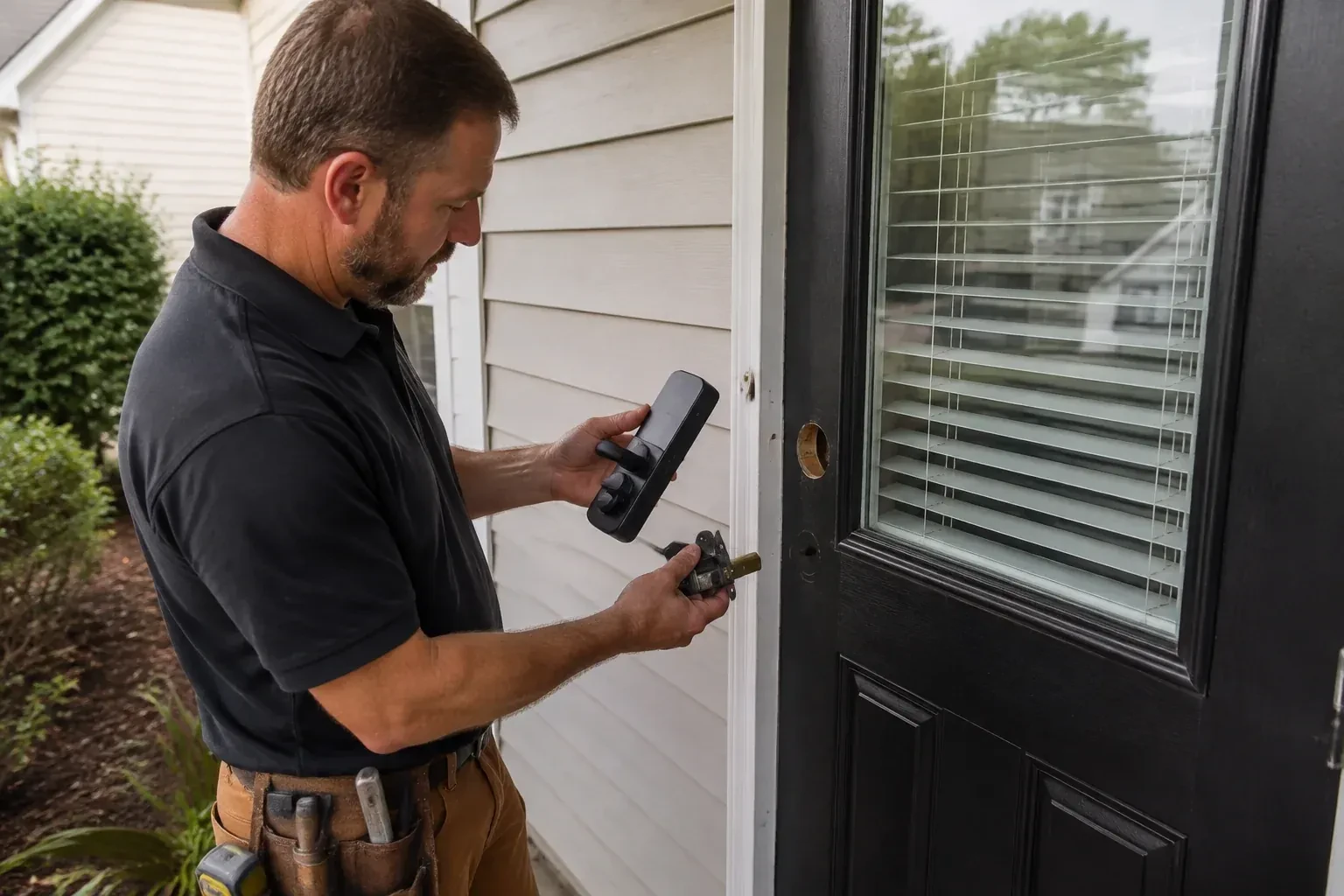
Once the hardware is tight, the lock gets the batteries its maker specifies, all fresh and all the same type, since mixing old and new cells shortens the life of the set. Most models then run a short calibration in which the motor learns which way is locked, how far the bolt travels and where it meets resistance. The locksmith runs this exactly as that model's instructions direct, door open or closed depending on the maker, then cycles it several times from the keypad and the thumb-turn while listening for a motor that strains. If the lock has a door-position sensor or a magnet to fit on the frame, it is placed and confirmed at this stage.
Codes you can give and take back
The lock now belongs to your account, and the day-to-day control is yours. Adding a code for a new cleaner, setting a weekend window for a visiting relative or removing the dog walker who moved away is done from the app or the keypad in moments, without a locksmith and without cutting anything. A short list of who holds which code, kept somewhere private, is worth writing on day one so the door's access stays as tidy as it is today. Codes should be unique per person and never shared aloud on the step; where the lock offers one-time or scheduled codes, use them for trades and deliveries and let them expire.
Smart Lock Installation
In the van
Smart deadbolt or smart lever set
Hinge shims and long hinge screws
Wi-Fi bridge or home hub
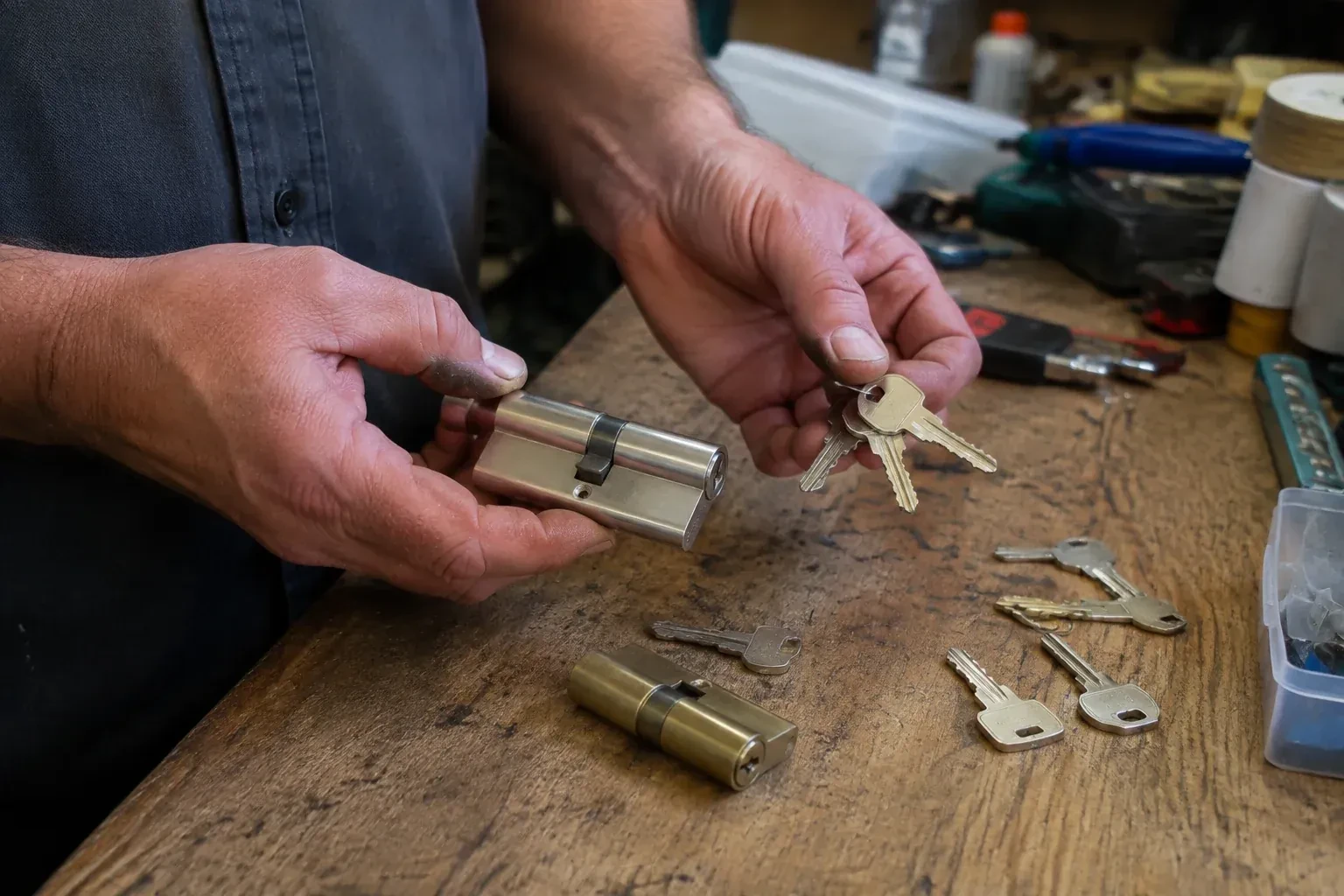
Mechanical override cylinder and repinning kit
Reinforced box strike with long screws
Smart Lock Installation
What affects the quote
Number of doors
A single front door is the base case. Adding the back door, the garage entry or a side door, whether each gets its own smart lock or is rekeyed to match the override key, extends the visit accordingly.
Finish and matching hardware
Standard finishes are the base. A less common finish, or replacing the knob or lever at the same time so the door matches, adds to the hardware portion of the quote.
Pairing a smart deadbolt with a smart lever on the same door
Some doors get a smart deadbolt only, while others pair it with a smart lever below so both turn from one app and share the same codes. Fitting and programming two devices on one door takes more work than one, confirmed once the door and hardware are seen.
What to have ready
- Is there a storm door in front of it?
- Which other doors should share the same key or the same system?
- How many people need their own way in, and does that list change often?
Smart Lock Installation: questions
QuestionsWhat is the difference between a keypad lock, a Bluetooth lock and a Wi-Fi lock?
A keypad lock is operated at the door by code and needs no phone at all. A Bluetooth lock adds phone control when you are within a few metres, which covers most daily use and keeps the lock off the internet. A Wi-Fi lock, either built in or through a small bridge, lets you check and change the lock from anywhere and sends alerts, at the cost of more battery use and a dependence on the home network. Many models combine two of these.
Fingerprint, fob, code or phone: which is worth having?
It depends on who uses the door. Codes suit everyone and need nothing in hand. Fobs or cards are a favourite for children and for anyone who finds small buttons difficult, since a tap does it. Fingerprint readers are convenient for a household of adults but can be fussy with cold, wet or gloved hands in winter, so pair them with a code. Phone control is for whoever wants alerts and remote checks. Most families end up using two of these.
Can the lock be set to lock itself?
Most models offer auto-lock, and it is one of the settings the locksmith configures with you. You choose the delay, from a few seconds to several minutes, and the lock throws the bolt on its own once the door has been closed that long. Models with a door sensor wait until the door is actually shut, which avoids the bolt extending into thin air. Families who have ever wondered whether the back door got locked tend to value this most.