Change or rekey · Kitchener
Lock Replacement & Upgrade
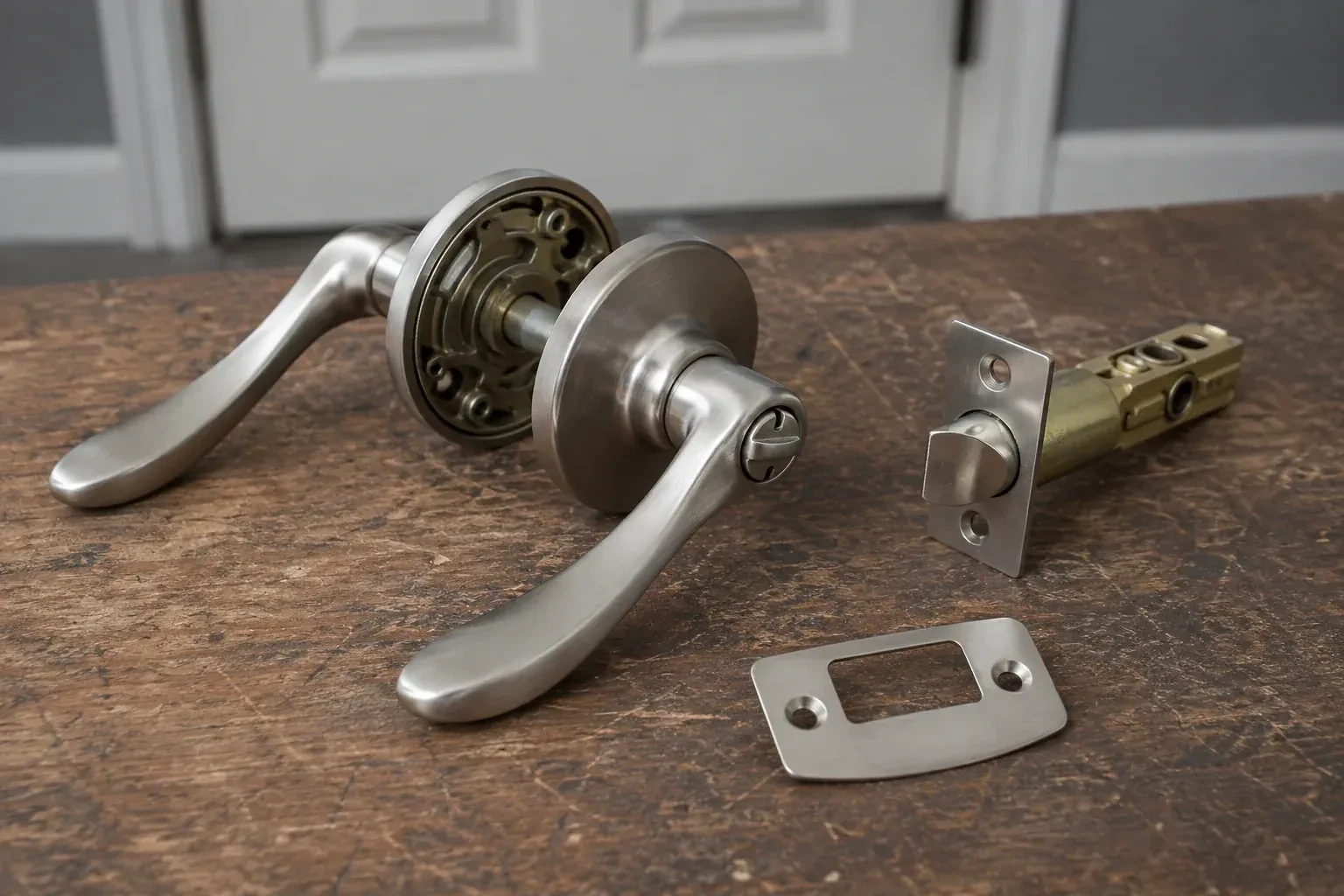
The lever on the side door droops toward the floor and rattles in your hand.
In plain words
Sometimes the reason is simply that the hardware looks wrong or has weathered badly. Road salt, freeze-thaw and humid summers are hard on finishes, and a brass handleset can go blotchy while a lacquered knob peels. The locksmith helps you pick a finish that suits the exposure, whether matte black, satin nickel or a PVD brass that resists tarnish, and matches the deadbolt, handleset and interior levers so the entrance reads as one design. Function and grade are chosen alongside looks, so a door refreshed for appearance also comes out better protected.
How the visit goesThe lever on the side door droops toward the floor and rattles in your hand. The latch no longer springs back on its own, so the door drifts open behind you unless you pull it shut and check it twice.
Lock Replacement & Upgrade
How the visit goes
Measuring the existing preparation
Before any product is chosen the door is measured. Backset first, the distance from the door edge to the centre of the bore, which on most doors here is 60 or 70 millimetres. Then the cross-bore diameter, the edge-bore size, the shape of the latch faceplate, the door thickness and the handing. The strike cut-out and any glass, trim or storm door that limits where hardware can sit are noted too. These few numbers decide which locks will drop straight into the door and which would need a filler plate, an extension kit or fresh drilling, so they are written down before the catalogue is opened.
Keying the new locks to one key
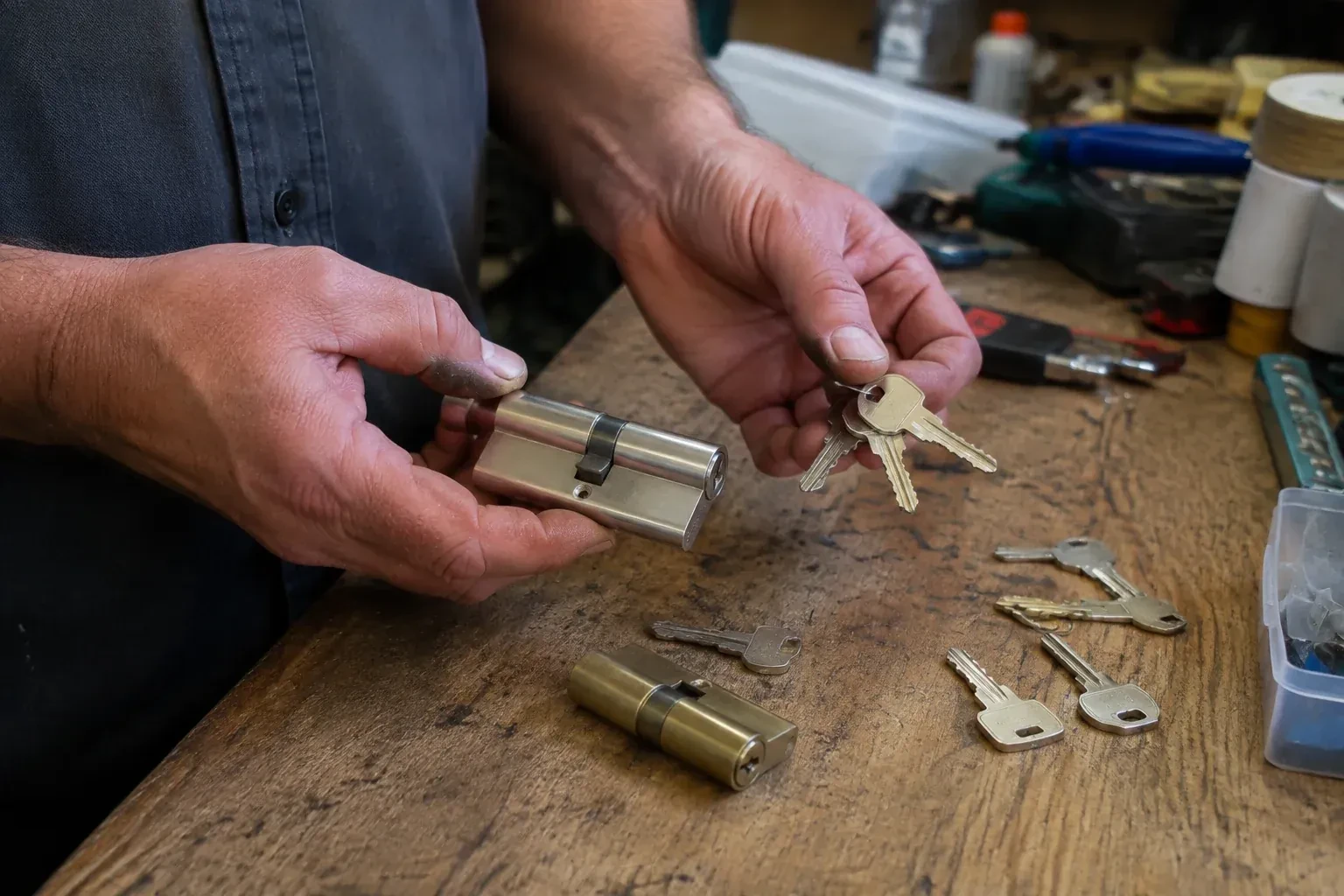
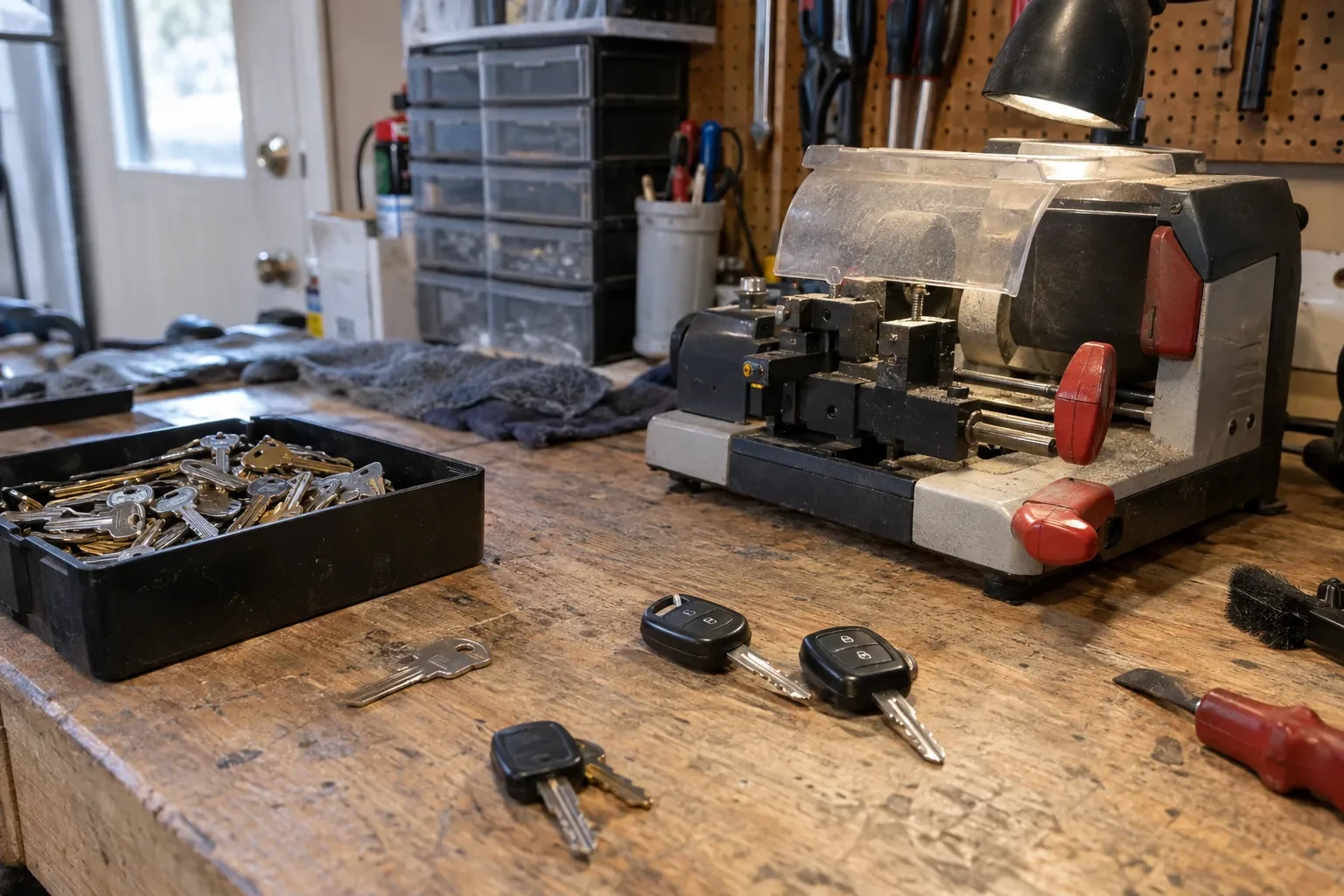
New cylinders arrive on random keys, so the locksmith pins them alike on site when you want one key for the house. Each cylinder is removed, the plug slid out on a follower so the springs stay put, and the bottom pins replaced to match a single new key. Existing cylinders that are staying are repinned the same way. Every key is then cut from the new combination, tried in every lock it should open, and any that drag are recut rather than handed over. The result is one key for the front, back and garage doors, and a clear count of how many exist.
Keys counted, named and planned
You receive the agreed number of keys, cut from the new pinning and tried in every door they should open, plus any code cards for a restricted system, which are what future copies are cut from. It is worth deciding on the spot who gets one and where the spare lives, ideally with a trusted neighbour or in a lockbox rather than in a drawer inside. If the house is now on a single key, retire every old key so none can be confused with the new one. A written list of which key does what goes in the home file.
Lock Replacement & Upgrade
In the van
Handleset with matching deadbolt
Boring jig and hole saws
Knob or lever entry set
Cylinders, plug follower and pinning kit
Graded deadbolt
Lock Replacement & Upgrade
What affects the quote
Keys cut
Each key is counted, and restricted keys cut against a card are a different item from standard blanks. Say how many people need one and the quote lists them.
Type of lock
A knob set, a lever, a deadbolt, a full handleset with deadbolt above, a patio door lock and a keypad or smart deadbolt each carry a different hardware cost and take different time to fit.
Grade of hardware
A light Grade 3 knob set, a residential deadbolt with a strong label rating and a Grade 1 commercial-style deadbolt are different products at different levels, and the quote follows the grade you choose for each door.
What to have ready
- Do you want every exterior door to open with one key?
- Is the door wood, steel or fibreglass, and roughly how thick is it?
- Can you photograph each lock from outside, inside and along the door edge?
Lock Replacement & Upgrade: questions
QuestionsCan the same visit replace locks on more than one door, or does each door need its own appointment?
One visit usually covers every door on the job. The locksmith brings a range of cylinders and strikes, measures each door's backset and bore, and works through the list in order, front entrance first if a key change matters most there. Having a rough list ready, which doors, and whether they should end up on one key or several, lets the locksmith plan hardware before arriving rather than working it out door by door on site.
Is there anything different about steel or fibreglass doors?
The lock hardware is the same; the door construction changes the method. Steel and fibreglass doors have a wooden or composite block inside the lock stile, and existing bores are used wherever possible. Where a new deadbolt must be added, the locksmith drills with a jig and bits suited to the skin so the hole is clean and square, and fits an edge plate designed for that door. Insulated doors also move less with humidity, so alignment tends to hold well.
Will a new lock fit the holes already in my door?
Usually, yes. Most residential doors are prepared to standard sizes, a 54 millimetre cross bore and a backset of 60 or 70 millimetres, and most modern hardware adjusts between those backsets. The locksmith measures before choosing, so the new lock is matched to the door rather than the other way around. Where an older mortise lock or an unusual bore is found, filler plates, extension kits or a carefully jigged new bore bring the door to standard.
Related services
- Deadbolt InstallationThe bolt on the front door is keyed on both sides.
- Vintage Mortise Lock ServiceAfter a wet summer the entry door sits lower in its frame.
- Smart Lock InstallationThe rental turns over every few months and each time you drive across town to swap keys, then wonder whether copies were made.