Lockouts · Kitchener
Break-In Damage Lock Repair
You came home to find the front door standing open.
In plain words
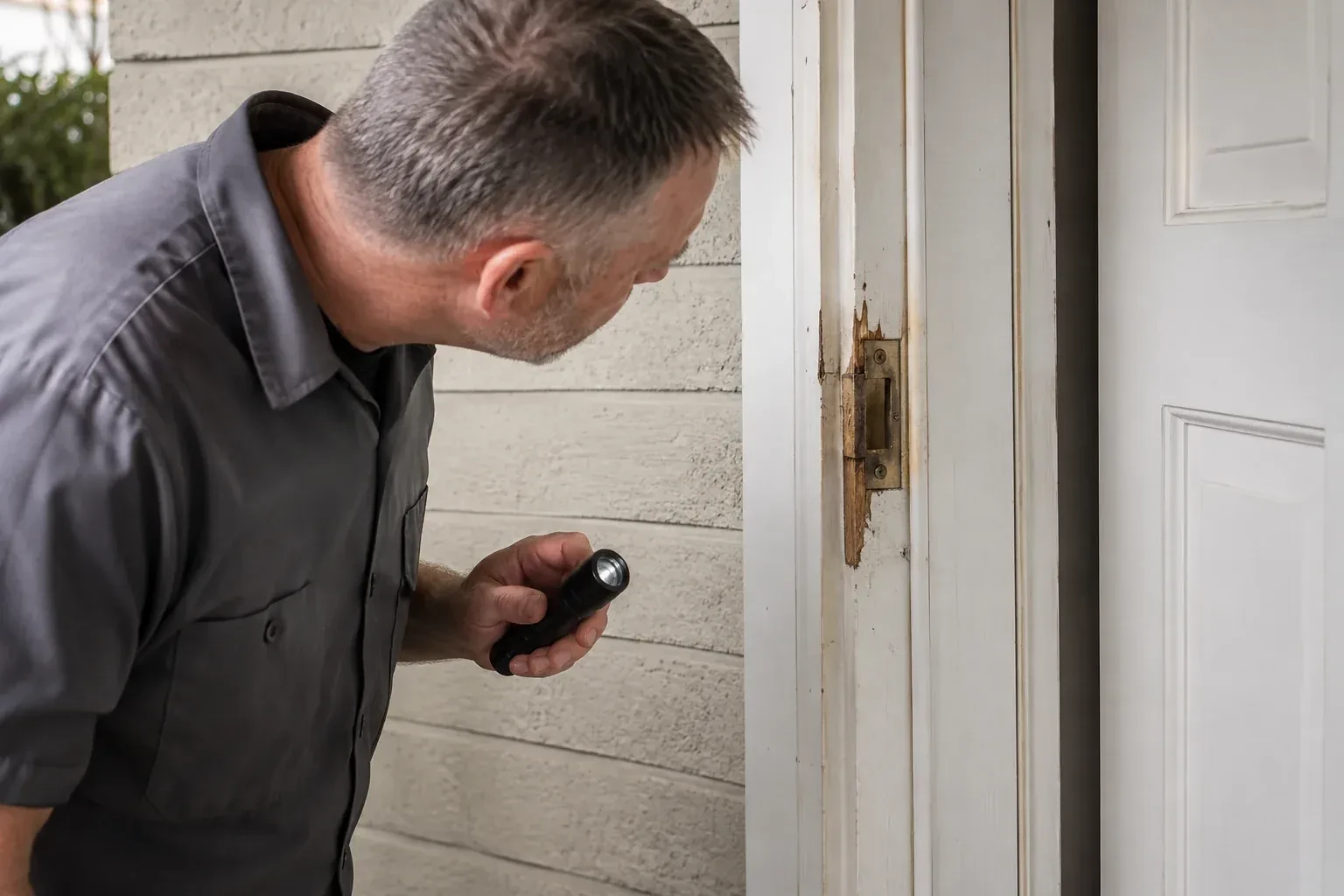
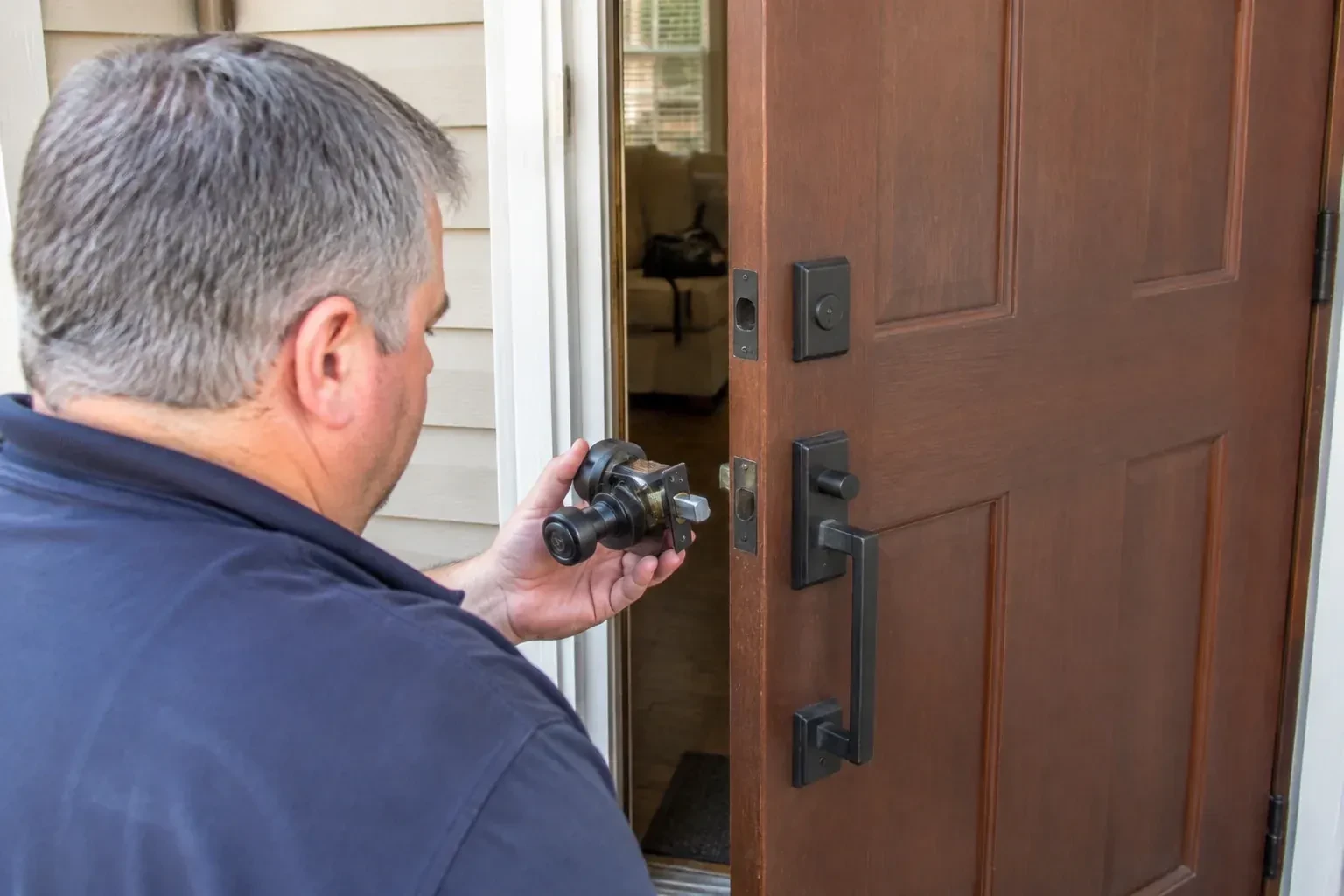
There are really two jobs inside one call. The first is tonight: make the door close and lock so the household can sleep. Where the door and frame are sound that means a new lockset or cylinder; where the jamb has split it means a repair plate over the break or a board across the opening, always arranged so the door still opens from inside without a key. The second job is the permanent repair, often the same visit: a reinforced strike box, long screws into the stud, a strengthened door edge and a deadbolt with a full throw. Both are quoted separately so you decide what happens when.
How the visit goesThey did not get in. The attempt left a screwdriver gouge in the door edge, a strike plate bent outward and a deadbolt that now needs a shove to throw. The lock held, but the door is telling you it was tested.
Break-In Damage Lock Repair
How the visit goes
What is behind the jamb
Long screws only help if there is something solid to bite into, so the locksmith looks at how the frame is built. Most house doors have a wood jamb, a shim space and then a stud, and three-inch screws reach through all three. A door beside a sidelight has glass where the stud would be, so fasteners are chosen for that construction instead. A jamb fixed to a masonry return, a steel frame in a commercial building, or a fire-rated suite door in an apartment corridor each call for their own hardware and fixing method. Knowing the wall before choosing the screws is what makes the reinforcement real.
Strengthening the door edge and hinges
Where a pry bar crushed the edge or the wood split around the lock bore, a wrap-around reinforcer is fitted: a steel channel that sleeves the door edge at the lock, ties the two faces together and gives the bolt and latch a solid seat. On the hinge side, the short factory screws are swapped for three-inch screws that reach the framing, and a bent hinge is replaced. Doors that were kicked hard sometimes need a hinge reinforcement plate across the jamb to spread the load. With both edges strengthened, the door no longer has a soft side, and a future kick meets steel and stud at every point that matters.
Glass and the reach-in problem
When entry came through glass beside the door, the lock was never the weakness, and the follow-up is about the glass. A tested security-film system, applied with its specified frame attachment, can slow an arm from passing through the sidelight, or the pane is replaced with laminated glass by a glazier. Where the layout allows, the deadbolt is repositioned beyond arm's reach of the glass. A thumb-turn stays on the inside, because it lets everyone leave without hunting for a key, and a keyed inside cylinder trades one risk for a worse one if there is ever a fire. The result keeps the intruder out and the way out clear.
Break-In Damage Lock Repair
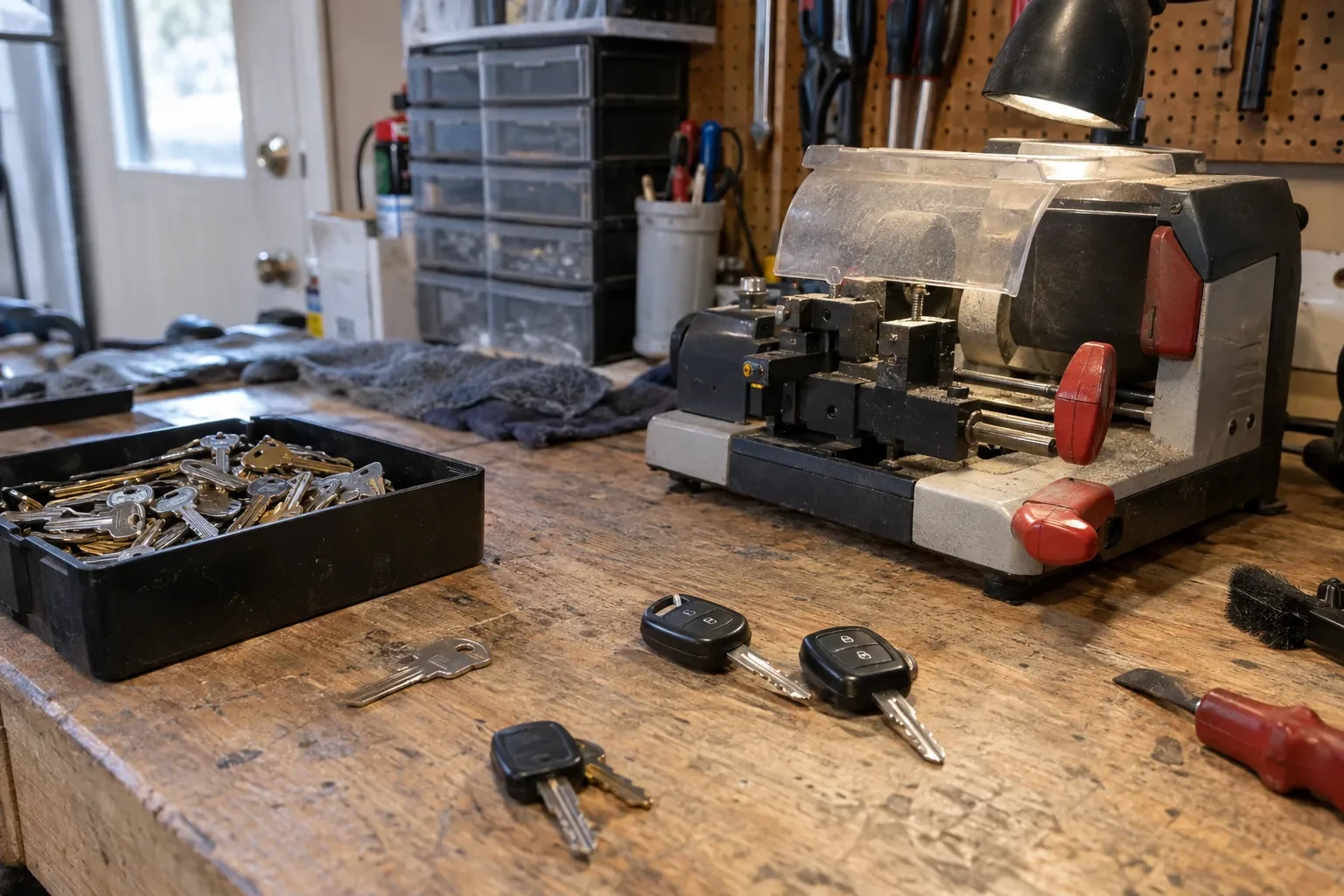
In the van
Hinge reinforcement plate
Wrap-around door edge reinforcer
Grade 1 deadbolt with one-inch throw
Anti-lift blocks and foot bolt
Three-inch strike and hinge screws
Break-In Damage Lock Repair
What affects the quote
Grade of the replacement deadbolt
A residential deadbolt with a one-inch throw and hardened insert, a heavier commercial-grade unit and a keypad or smart deadbolt sit at different points, and the quote names the one you choose.
Securing now versus repairing fully
Some households want the door locked tonight and the permanent repair booked later; others want both done at once. The quote separates the two so you can choose either order without surprises.
How many parts were damaged
One broken cylinder on a sound frame is a small repair. A torn strike, a split jamb, a crushed door edge and bent hinges together are a longer visit with more hardware, and the quote follows the count.
What to have ready
- Is there glass beside the door or in it?
- Are there other doors or a garage entry on the same key?
- Is the damage to the lock, the frame, the door edge or the glass, or several?
Break-In Damage Lock Repair: questions
QuestionsSomeone reached through the sidelight to turn the thumb-turn. Should I fit a deadbolt keyed on both sides?
It is tempting, but a thumb-turn lets everyone in the household leave by that door without hunting for a key, special device or special knowledge, so a keyed inside cylinder is the wrong fix. Better answers are a tested security-film system or laminated glass in the sidelight to slow an arm from passing, moving the deadbolt beyond arm's reach of the glass where the door allows, and a glass-break sensor if you have an alarm.
How is a forced storefront door repaired?
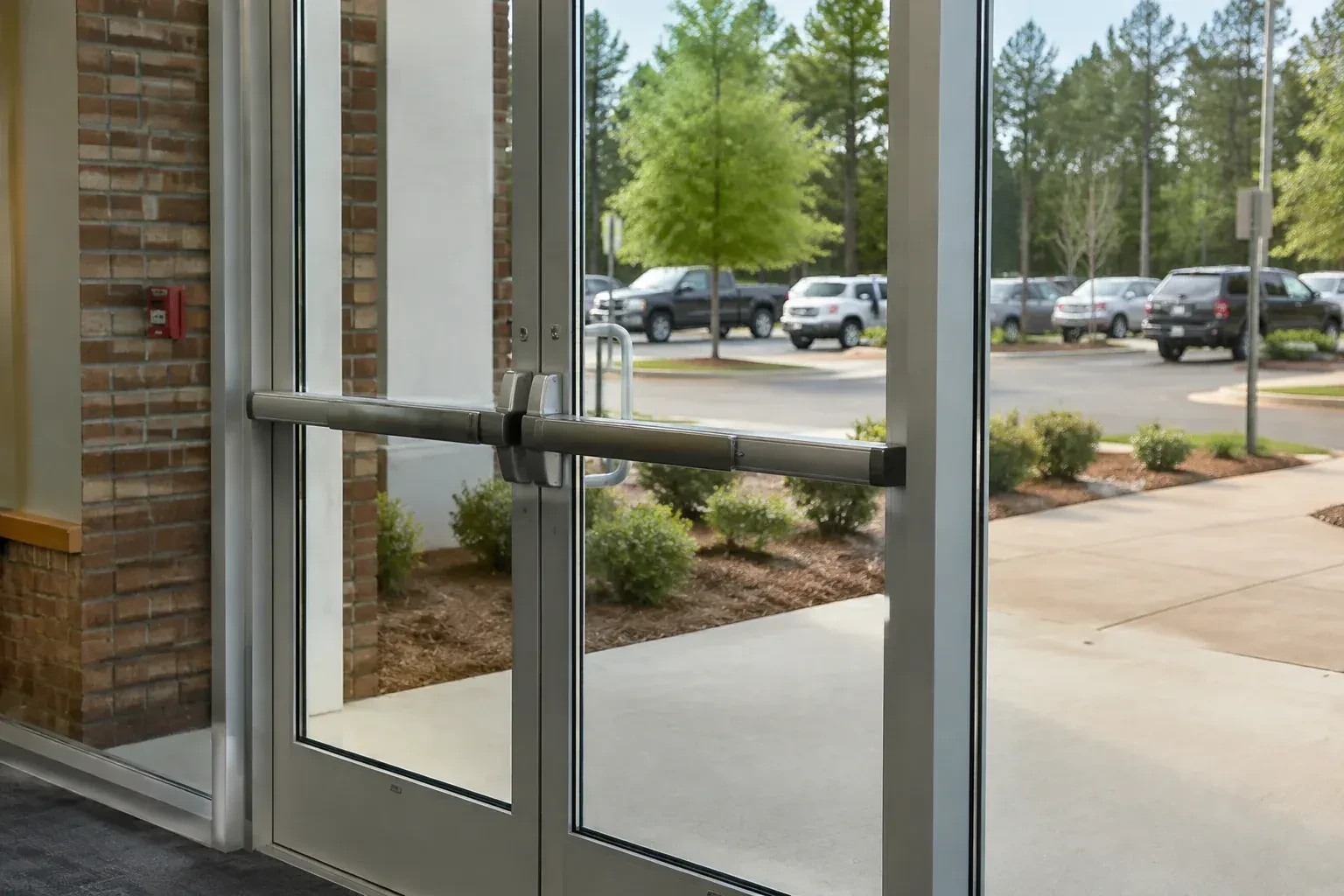
Aluminum storefront doors are attacked at the narrow stile, which bends under a pry bar, or at the hookbolt and glass. The locksmith straightens or replaces the damaged section where possible, fits a new narrow-stile deadbolt or hookbolt with its strike, and adds a latch guard or anti-pry astragal along the meeting edge so a bar has no purchase. Cores are rekeyed and codes reviewed. The inside release stays a single motion so the exit route is unchanged.
How long does a break-in repair take?
It depends on how much gave way. A new lockset and a reinforced strike on a sound frame is a modest job. Bonding a split jamb, sleeving a crushed door edge, reinforcing the hinges and rekeying several cylinders takes longer, and a shattered frame means a securing visit now and a second visit after the carpenter. The locksmith gives a sense of the time once the damage has been seen, and the opening is secured before leaving even when a part has to be ordered.
Related services
- Business Lockout ServiceMinus eighteen with a wind, and the exterior cylinder on the shop door has frozen solid overnight after yesterday's slush.
- Broken Key ExtractionThe padlock on the shed has been stiff all summer.
- Seized & Jammed Lock OpeningThe lock works, but only if you lean on the door with your hip while turning the key.