High security · Kitchener
Safe Installation & Servicing
A community group counts the weekend's raffle and bake-sale cash on a kitchen table, then carries it home in a tote bag until the bank opens Monday, because there has never been anywhere safer to leave it.
In plain words
Businesses call for this service for two different reasons that sometimes overlap: protecting cash held overnight, and protecting paper records that would be enormously slow to recreate. The two priorities point toward different construction, since a cash-rated body resists tools while a document-rated interior resists heat and holds its temperature down through a timed fire test. Servicing an existing unit follows the same split: bolt-work and lock mechanics get physical attention, while any fire-rated lining is checked for the trapped moisture that builds up behind an airtight seal.
How the visit goesThe till drawer has been holding two days of cash because the new shop never got a proper safe, and a locked drawer under the counter is the only thing standing between that cash and anyone who works late.
Safe Installation & Servicing
How the visit goes
What kind of lock is already, or will be, on the door
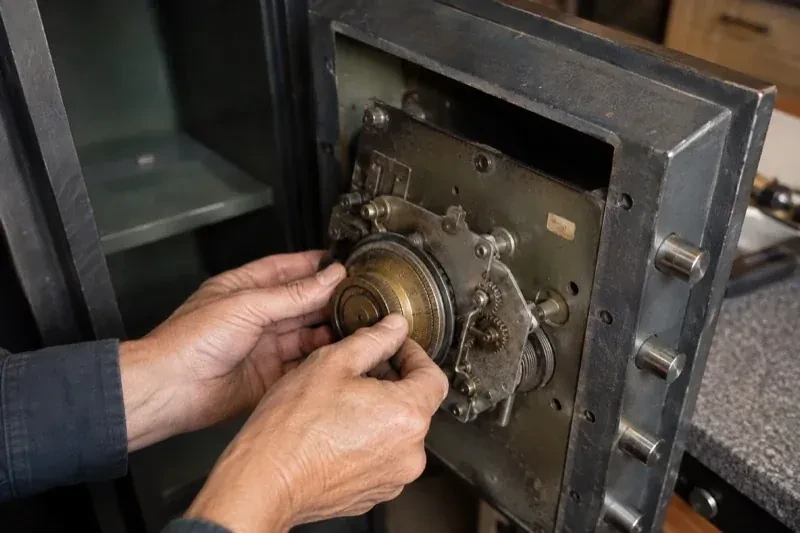
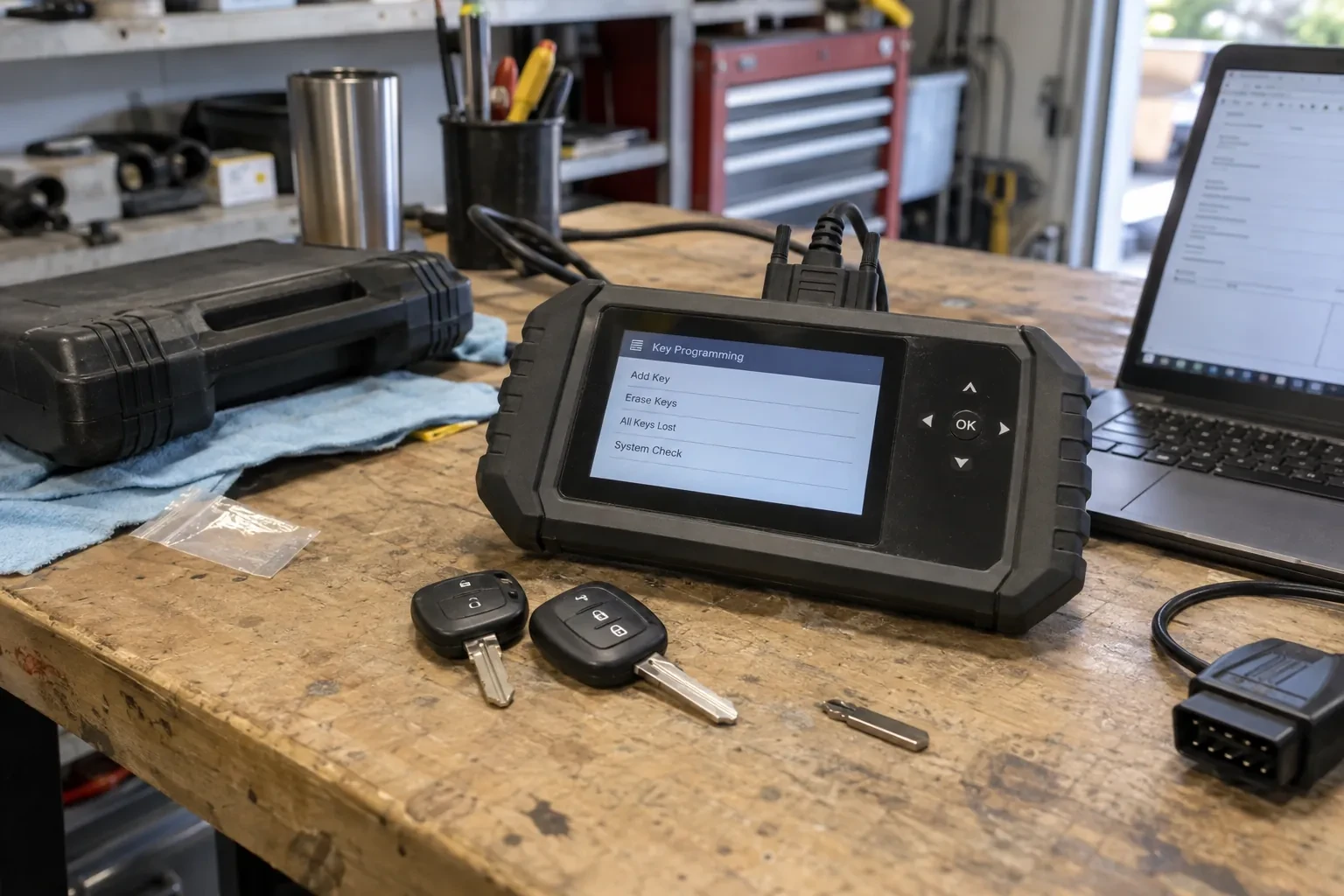
A mechanical dial and an electronic keypad are serviced differently, so the lock gets identified early. On a new installation this is a straightforward choice by the owner. On an existing safe, the locksmith checks whether the dial turns smoothly through a full combination, whether an electronic keypad still lights up and accepts a code, and whether a hidden mechanical override exists behind the keypad in case the batteries run flat. Any handle that binds or clicks without retracting the bolt gets traced back to the lock before the rest of the service continues.
Fitting and setting the lock
A mechanical dial lock is installed and set to a combination chosen privately by the owner, then run through a full sequence of locking and unlocking several times before anyone calls the job finished. An electronic keypad is programmed with a new code, its low-battery warning is tested rather than assumed to work, and any secondary user codes the owner wants are added at the same time. Where a hidden mechanical override sits behind the keypad, its key is handed over separately and its location explained.
Bolt-work that keeps moving smoothly
The internal mechanism that throws and retracts the bolts benefits from the same kind of attention a door lock gets, on a longer cycle. A dry or purpose-made bolt-work lubricant, applied every year or two depending on how often the safe is opened, keeps the mechanism from stiffening with old grease or picking up rust in a damp room. Household oil is generally the wrong choice here, since it tends to attract dust and grit rather than shed it the way a purpose-made lubricant does.
Safe Installation & Servicing
In the van
Rated safe (burglary and fire)
Moving dolly and floor protection
Nine-volt backup battery
Mechanical or electronic lock
Torque wrench and socket set
Safe Installation & Servicing
What affects the quote
Documentation requested
Some customers want photographs of the anchoring, a written note of the model and ratings, or both, usually to satisfy an insurer, and preparing that paperwork adds a little time to the visit.
Fire rating and duration chosen
A longer fire-rated duration or a lower protected temperature for digital media generally means thicker insulation and a larger overall footprint for the same interior storage space.
Building access restrictions
A property requiring a booked loading dock, a service elevator reservation, or coordination with building management before a heavy delivery can arrive adds scheduling steps beyond the installation work itself.
What to have ready
- Are there stairs or narrow doorways between the entrance and that spot?
- Is that floor concrete, wood subfloor, or tile?
- Has the safe ever been anchored to the floor or wall before?
Safe Installation & Servicing: questions
QuestionsWhat kind of floor can a safe be anchored to?
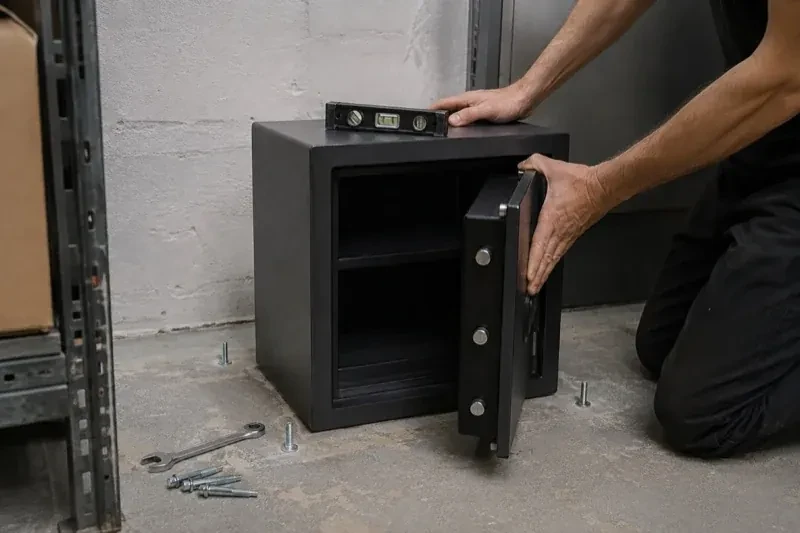
Solid concrete is the most straightforward surface, taking a masonry anchor bolt directly. A wood subfloor works too, provided the anchoring reaches into the floor joists beneath the surface layer rather than just the plywood or the flooring on top. Tile is the awkward case, since a bolt through it tends to crack the surrounding tiles, and an alternative anchoring point or a different spot in the room is usually the better route there.
Do you deliver and move the safe, or do I need to arrange that?
Delivery and the final move into position are part of the service, using equipment suited to the safe's actual weight rather than improvising with furniture dollies or straps meant for lighter loads. The route in is measured ahead of time so doorways, stairs, and tight turns are accounted for before the unit arrives, which avoids a surprise at the one hallway that turns out to be too narrow.
Is a fireproof safe also resistant to a break-in?
Not automatically. Fire resistance comes from an insulated, sealed construction that is not necessarily built to resist tools, while burglary resistance comes from thick steel and hardened plate that is not necessarily built to survive a sustained fire. Some units are built and rated to both standards at once, but a fire-only safe left unrated for burglary should not be assumed to hold up against a determined attempt with tools.