Car keys · Centreville
Transponder Key Programming in Centreville
A second driver has joined the household, and the one existing key gets handed back and forth between two schedules that rarely line up.
In plain words
A modern car key is often two systems living in one housing: the transponder, a chip with no battery of its own that only the immobilizer needs to see, and the fob, a battery-powered remote that handles locking, unlocking and alarm functions from a distance. Programming a transponder key addresses the first system, letting the engine start, while pairing the fob addresses the second, restoring the buttons. A key can pass one test and fail the other, so both get checked before the visit is finished.
How the visit goesEvery key that ever opened the car is gone at once, one taken with a stolen bag, the spare misplaced months ago and never replaced. There is no working key left anywhere in the house, the garage, or a coat pocket, and the car sits exactly where it was parked.
Transponder Key Programming
How the visit goes
How the vehicle's key list is reached
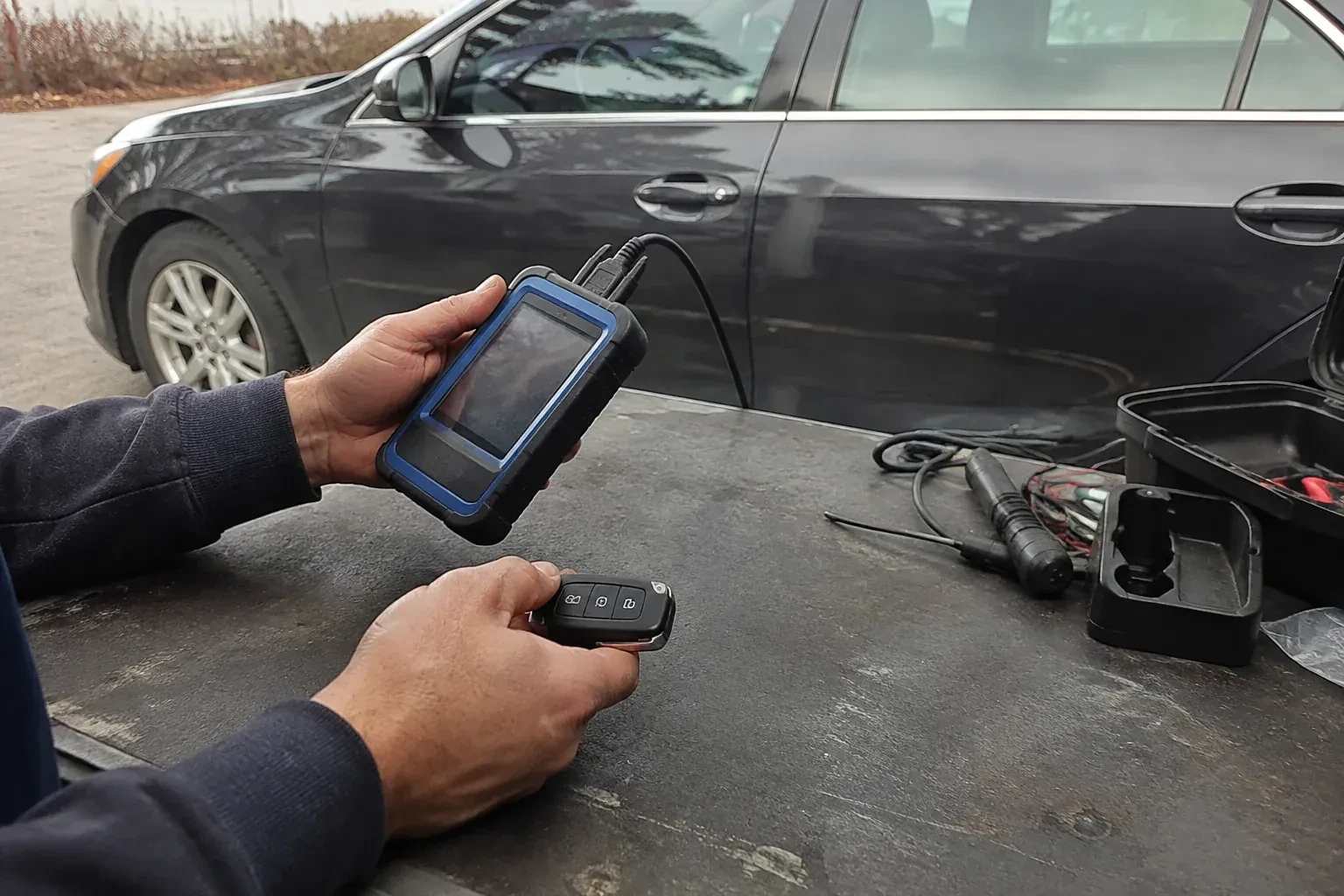
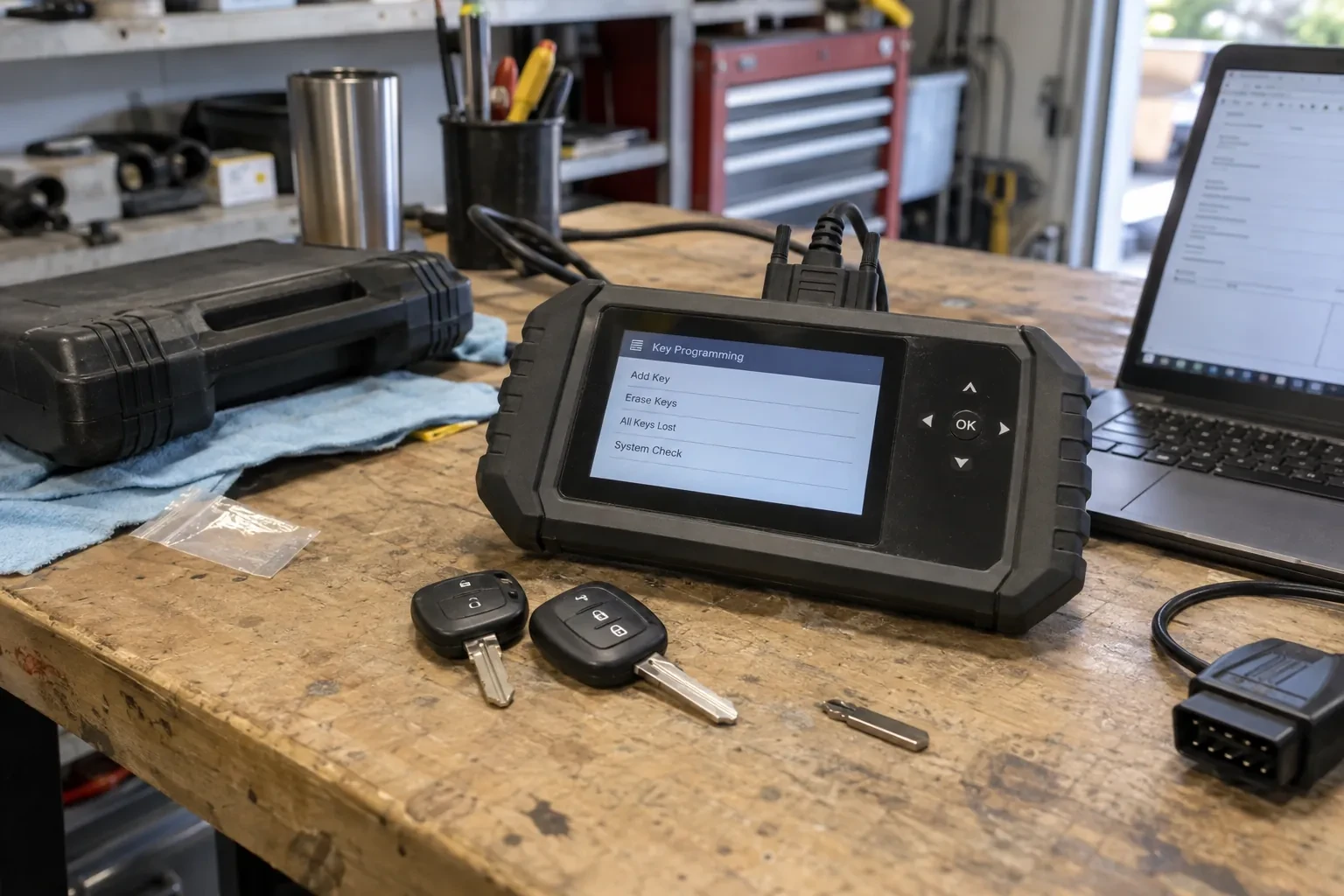
Some vehicles let a locksmith see and edit the key list directly once a diagnostic tool is connected to the onboard port. Others hide that list behind a manufacturer security session that has to be established first, particularly on newer models with more layers between the port and the immobilizer itself. Knowing which situation applies before starting sets the right expectation for how the visit will unfold, and for all-keys-lost work it decides whether the first step is reached directly or has to be built from nothing.
Bringing the fob back to life
When the vehicle uses a remote-head or proximity fob, the visit includes more than the chip: a fresh battery goes into the fob itself, the remote-entry and any push-button start functions are paired, and the small metal emergency insert is checked and demonstrated if the fob carries one. None of this is separate from the programming; a fob that starts the car but cannot lock the doors, or unlocks the car but leaves the driver stranded when the battery dies, has not finished the job.
Looking after the chip
The chip inside a key head has no moving parts and asks for very little, but it does not tolerate being separated from the blade by force. A key that gets bent, snapped, or pried at with tools meant for a different job can lose its chip along with its shape, and a chip cut in half no longer answers anything. Carrying the key on a ring rather than loose in a pocket, and keeping it away from repeated hard impacts, is most of what looking after it involves.
Transponder Key Programming
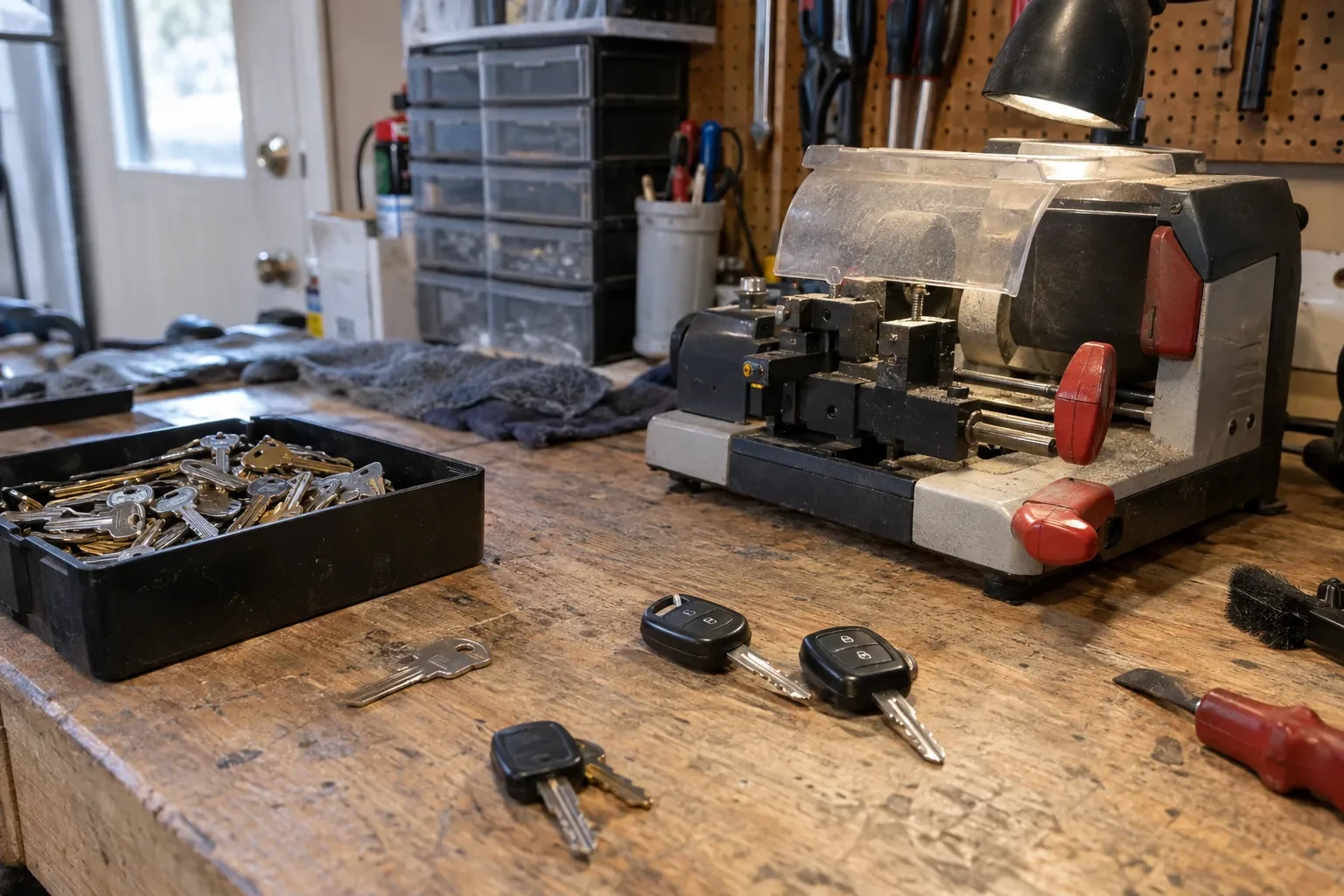
In the van
Proximity smart key
Fob battery
Key cutting machine
VIN reference tool
Diagnostic laptop or tablet
Transponder Key Programming
What affects the quote
How the vehicle's key list is reached
Some vehicles allow direct access through the onboard diagnostic port, while others gate that list behind a manufacturer-level security session that takes additional steps to establish. Which situation applies to a given vehicle affects how the visit is scoped.
Fob battery or housing replacement
A fob with a failing battery, cracked buttons, or a worn housing may need that hardware replaced alongside the programming, which is identified during the initial check of the key rather than assumed either way.
Age and availability of the correct blank or chip
Older or less common vehicles sometimes use a blank or chip family that takes longer to source, particularly for a model that has been out of production for some years, which affects how the visit is scheduled.
What to have ready
- Is this a lost, stolen, damaged or spare-key situation?
- Is the key a basic blade, a remote-head, or push-button proximity?
- Where is the vehicle parked right now?
Transponder Key Programming: questions
QuestionsI just bought a used vehicle with one key. What should I do first?
Arrange a second key while the first one is still working, since it costs far less time and trouble than doing the same thing after that single key is lost or damaged. It is also a reasonable moment to confirm exactly how many keys the vehicle's system currently recognizes, especially if the previous owner cannot say for certain.
What information should I have ready before this visit?
The vehicle's year, make and model, and its VIN if it is easy to find, let the locksmith arrive with the right blank and chip already in hand. Knowing how many keys currently work, whether any were lost or stolen, and whether the vehicle uses a basic blade or a fob shapes the rest of the visit before a single tool comes out.
What happens if every key for my car is gone?
All-keys-lost work starts by re-establishing secure access to the vehicle's own immobilizer module, since there is no existing key left to vouch for a new one. Once that access is confirmed, a fresh key is cut and its chip is written into the vehicle the same way any key would be, and the visit finishes with the usual start-up test across a few ignition cycles.
Related services
- Car Key ReplacementYou bought the car privately and it came with a single key on a shoelace.
- Spare Car Key DuplicationA teenager just passed a driving test and reasonably wants a key of their own rather than negotiating over the family's single copy every time the car is needed.
- Key Fob ProgrammingEvery fob for the car disappeared at once inside a bag that was never recovered, and the vehicle now sits in the driveway with no way in and no way to start it.