Car keys · Centreville
Car Key Replacement in Centreville
You bought the car privately and it came with a single key on a shoelace.
In plain words
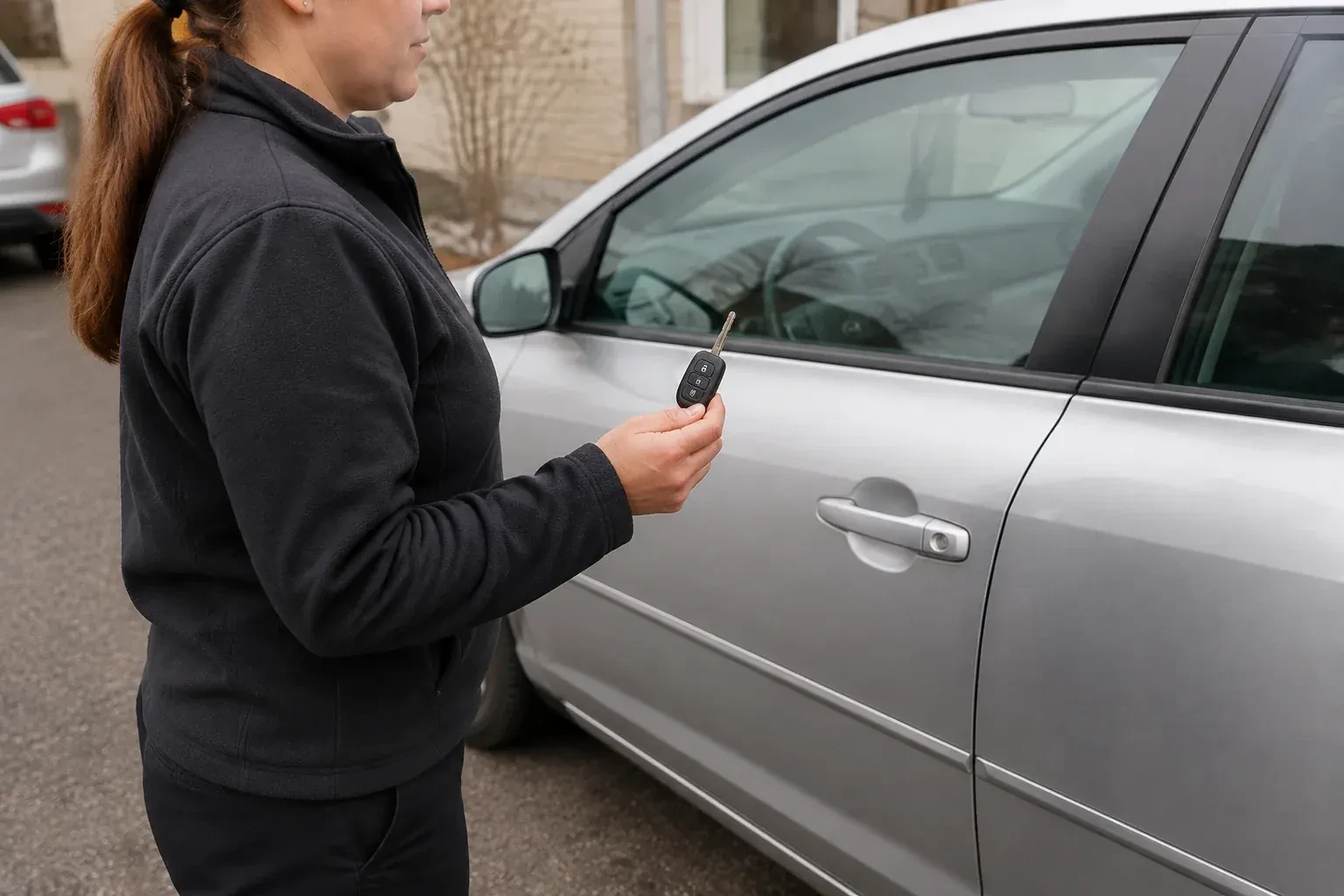
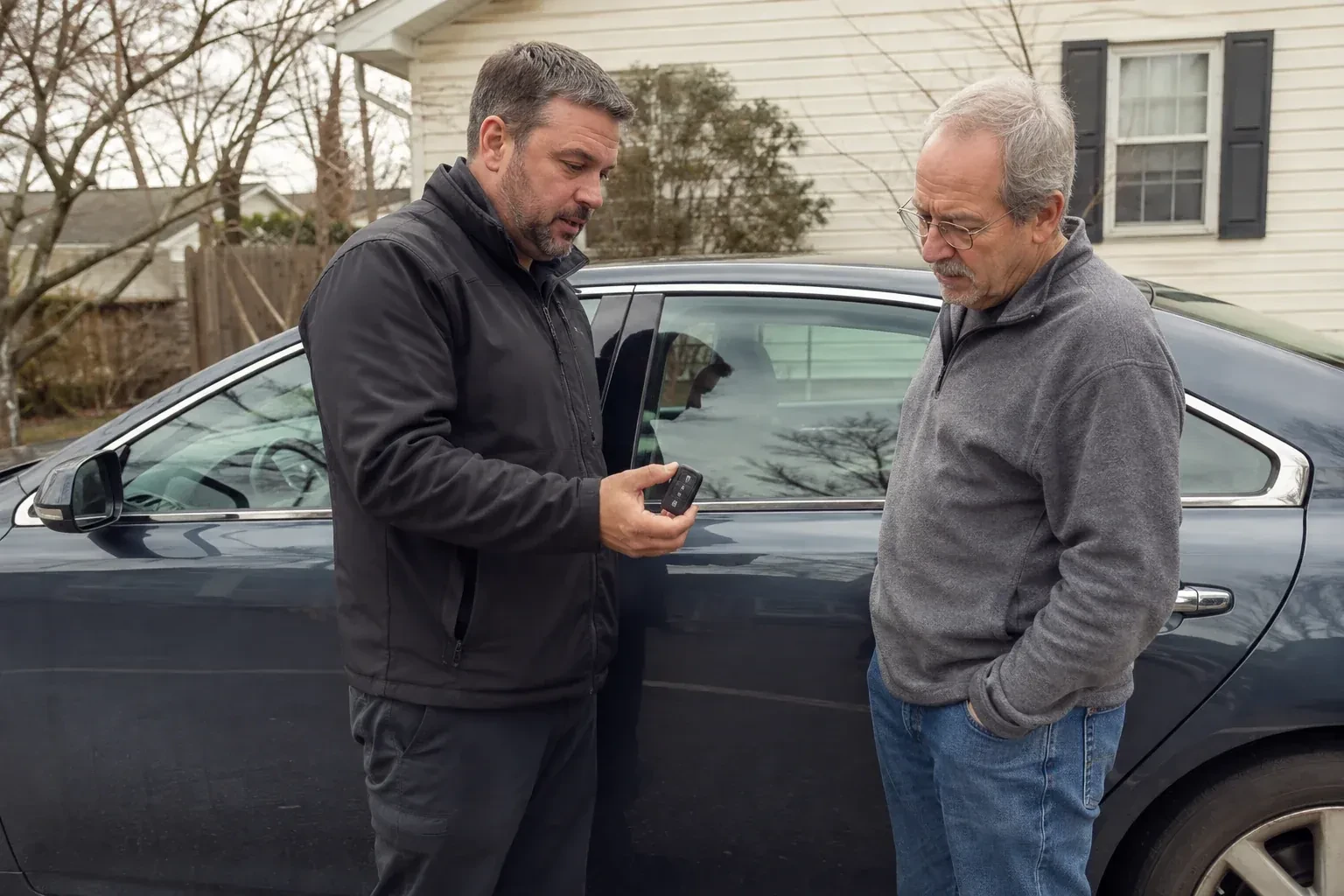
Every replacement key starts with a simple question: is this your car to key? The answer is settled with government photo identification and the vehicle permit, the green ownership issued by ServiceOntario, matched against the VIN on the dash and the door label. A lease agreement, fleet paperwork or a bill of sale covers a company car or a vehicle bought last week. The check takes a minute and it protects you as much as anyone, because the same standard applies to whoever might one day ask for a key to your car. Once it is done, the technical work begins.
How the visit goesThe only key to the car went into the lake with the kayak. Now the car sits locked in the driveway with a full tank, and there is no spare in the house, in a coat pocket or anywhere else.
Car Key Replacement
How the visit goes
The locks and ignition, not only the key
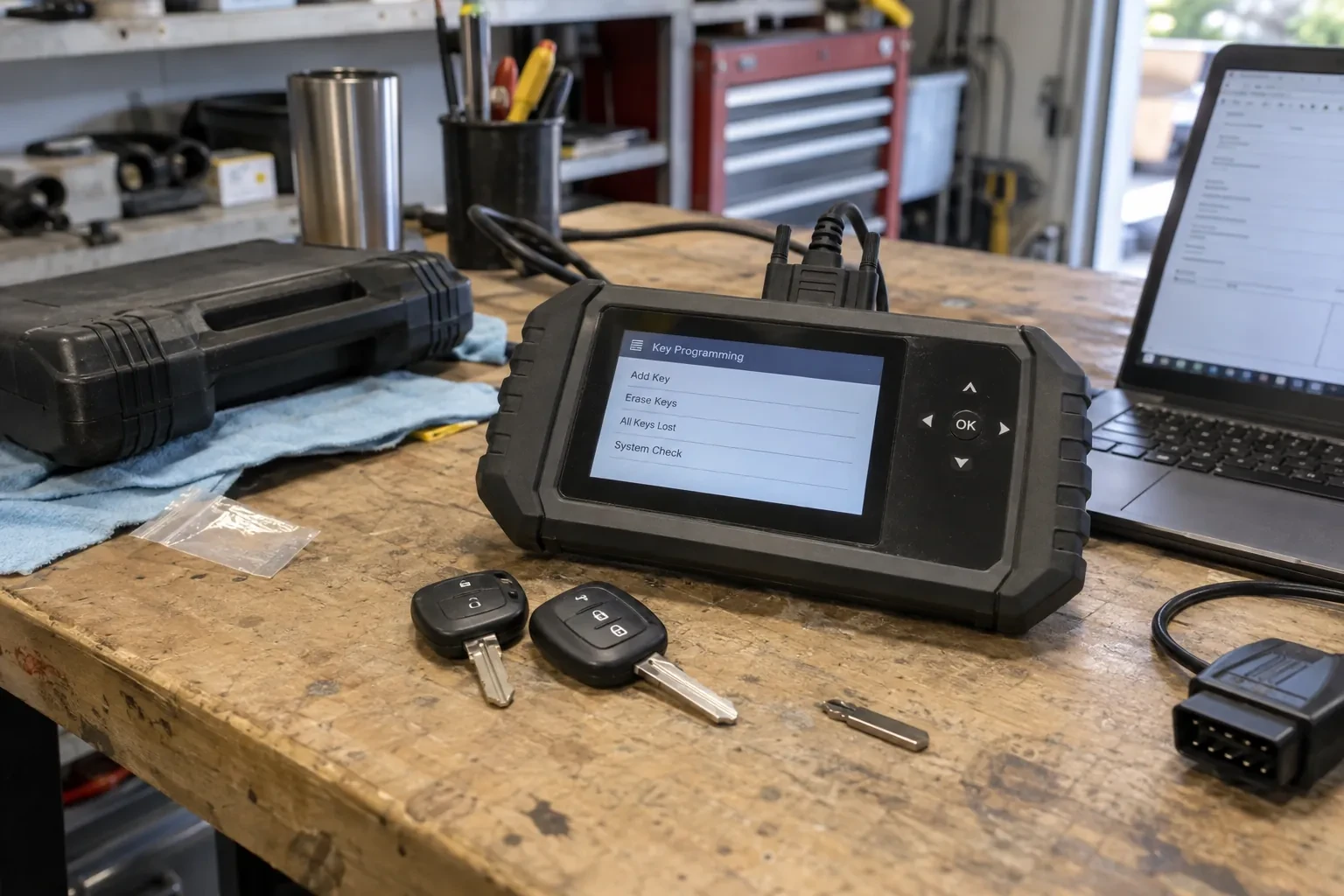
A new key is only as good as the cylinders it turns, so the check looks at the car too. A door lock that has gone unused for years on a keyless vehicle can be stiff with salt and grit; an ignition that needed a jiggle with the old key has worn wafers that will feel tight with a fresh blade; a previous replacement may have left the doors and ignition on different cuts. Aftermarket alarms and remote starters can also sit between the key and the immobilizer. Spotting these early lets the locksmith bring the right parts and explain what else the car may need so the new key feels right.
Decoding the door lock when there is no code
When the code is unavailable, the lock itself becomes the source. The locksmith works a decoding pick into the driver's door cylinder, feels each wafer to its set position and reads off the depth, producing a full cut sequence without removing the lock from the door. The blank is then cut to that reading and tried in the door and the ignition. On cars where the ignition carries an extra wafer the door lacks, the last position is found by trying the small number of possible depths. This is careful, patient work that leaves the door lock exactly as it was.
Keys that work every lock on the car
You leave with keys that have been tried, not merely programmed. Each one has opened the doors, turned or woken the ignition, started the engine and worked every button it carries, and you have watched it happen. If the car has a mechanical lock that was stiff, it has been freed and lubricated so the blade is a genuine backup. Should the old key have been rebuilt around its original electronics, it has been through the same checks as a brand-new one. The point of the routine is simple: the next time you reach for the key, there is nothing to wonder about.
Car Key Replacement
In the van
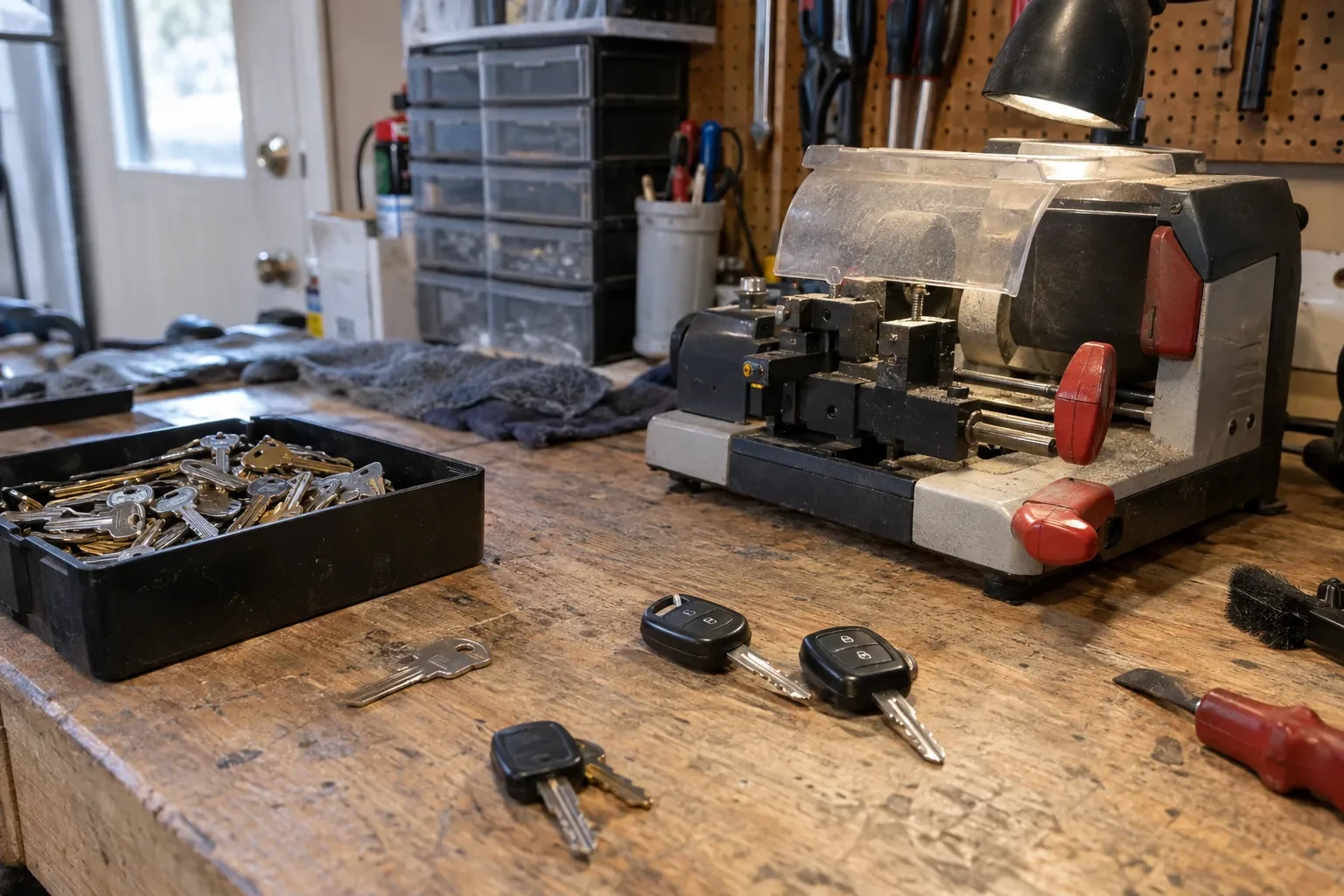
Decoding pick and lock reader
Transponder key blank
Security PIN or secure-data access
Proximity fob with emergency blade
Remote-head key shell
Car Key Replacement
What affects the quote
Year, make and model
The vehicle decides the blank, the chip and the programming route. A twenty-year-old sedan with a plain transponder key and a recent proximity-start model are different jobs, and the quote follows the VIN rather than a flat figure.
Where the vehicle is
Travel is part of every mobile call. A car on a driveway across town and one in a lot at the end of a rural road involve different trips, and the quote reflects the distance.
Battery and access to the car
A flat vehicle battery needs a maintainer during programming, and a locked car with no key has to be opened before the diagnostic port can be reached. Both are small items that the quote names plainly.
What to have ready
- Does the car start with a key in the ignition or with a push button?
- Do you have photo identification and the vehicle permit with you?
- What buttons did the old key have: lock, unlock, trunk, panic, remote start?
Car Key Replacement: questions
QuestionsWhat is a transponder key, and does my car have one?
A transponder is a small chip in the head of the key with no battery of its own. When the key is in the ignition, or the fob is inside the cabin, the immobilizer sends a signal and the chip answers with a code; if the code is unknown, the engine is prevented from running. Every new light vehicle sold in Canada since September 2007 has been required to have an immobilizer, so almost any car from that time on uses one.
The fob died in the cold. Is that a battery or the key?
Almost always the battery. Coin cells deliver less in deep cold, and a cell that was already weak goes quiet on the first bitter morning. Most cars still start with a flat fob if it is pressed to the start button or laid in a marked slot, and the emergency blade opens the door. Replace the cell, and if the fob stays silent with a fresh one, the remote board or a corroded contact is the next thing to look at.
Which documents count as proof of ownership?
Government photo identification plus the vehicle permit issued by ServiceOntario, the green ownership showing the VIN, is the usual pair. An insurance slip or a lease agreement in your name also works. For a company vehicle, a work order or letter from the fleet manager naming the VIN covers it. If you bought the car days ago, bring the bill of sale and the signed permit until the transfer is done.
Related services
- Spare Car Key DuplicationA teenager just passed a driving test and reasonably wants a key of their own rather than negotiating over the family's single copy every time the car is needed.
- Key Fob ProgrammingEvery fob for the car disappeared at once inside a bag that was never recovered, and the vehicle now sits in the driveway with no way in and no way to start it.
- Transponder Key ProgrammingA second driver has joined the household, and the one existing key gets handed back and forth between two schedules that rarely line up.