Car keys · Parkway
Car Key Replacement in Parkway
You bought the car privately and it came with a single key on a shoelace.
In plain words
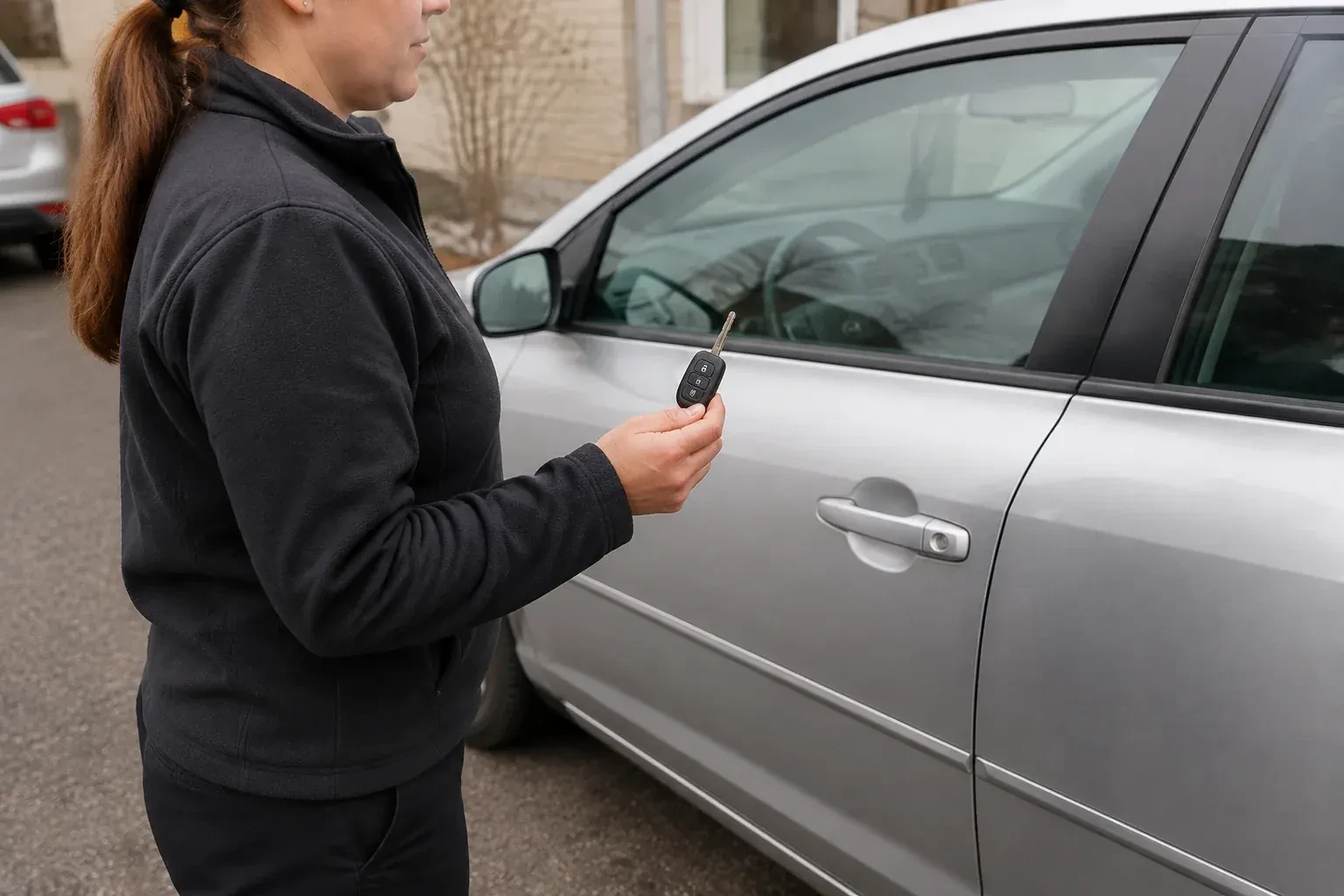
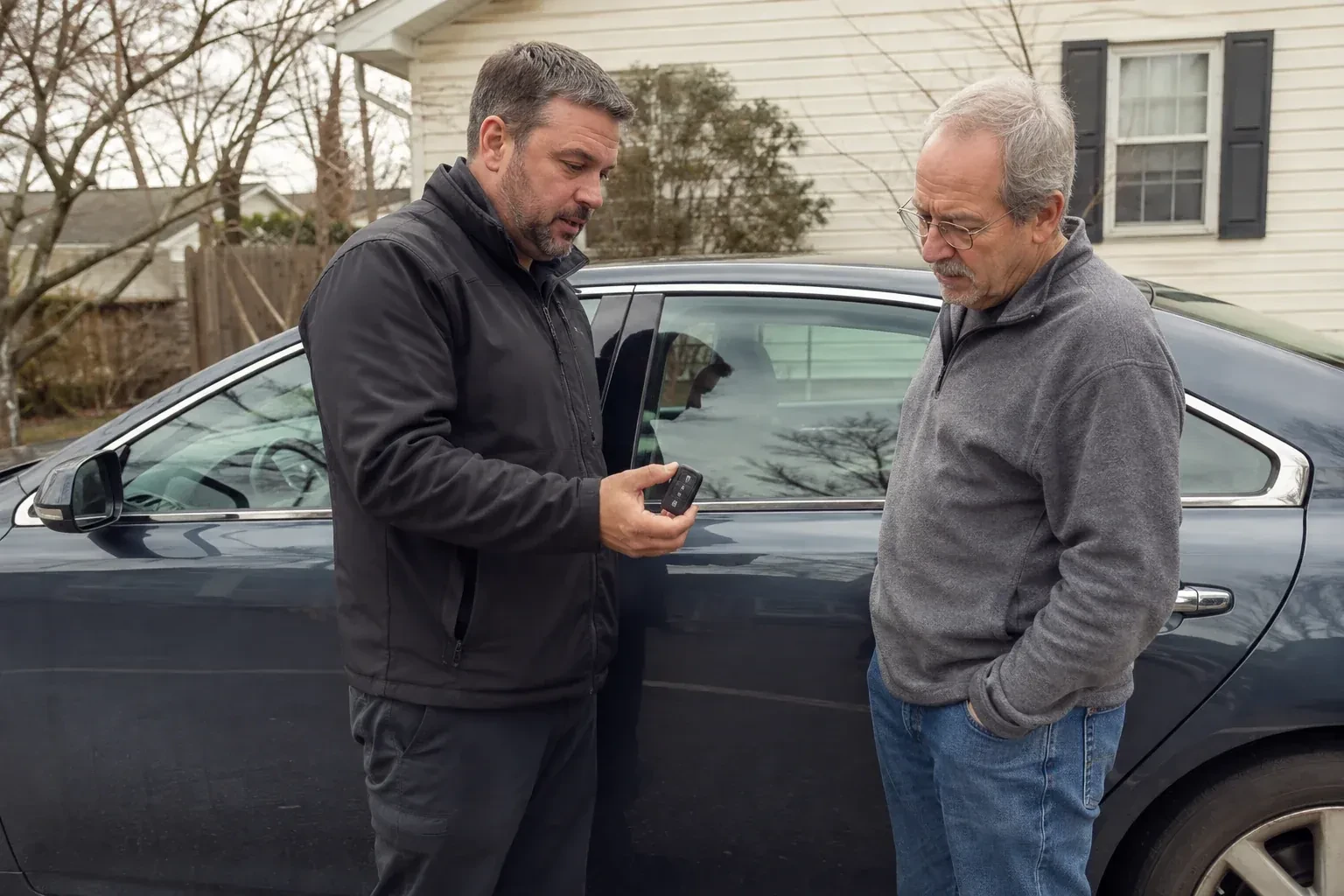
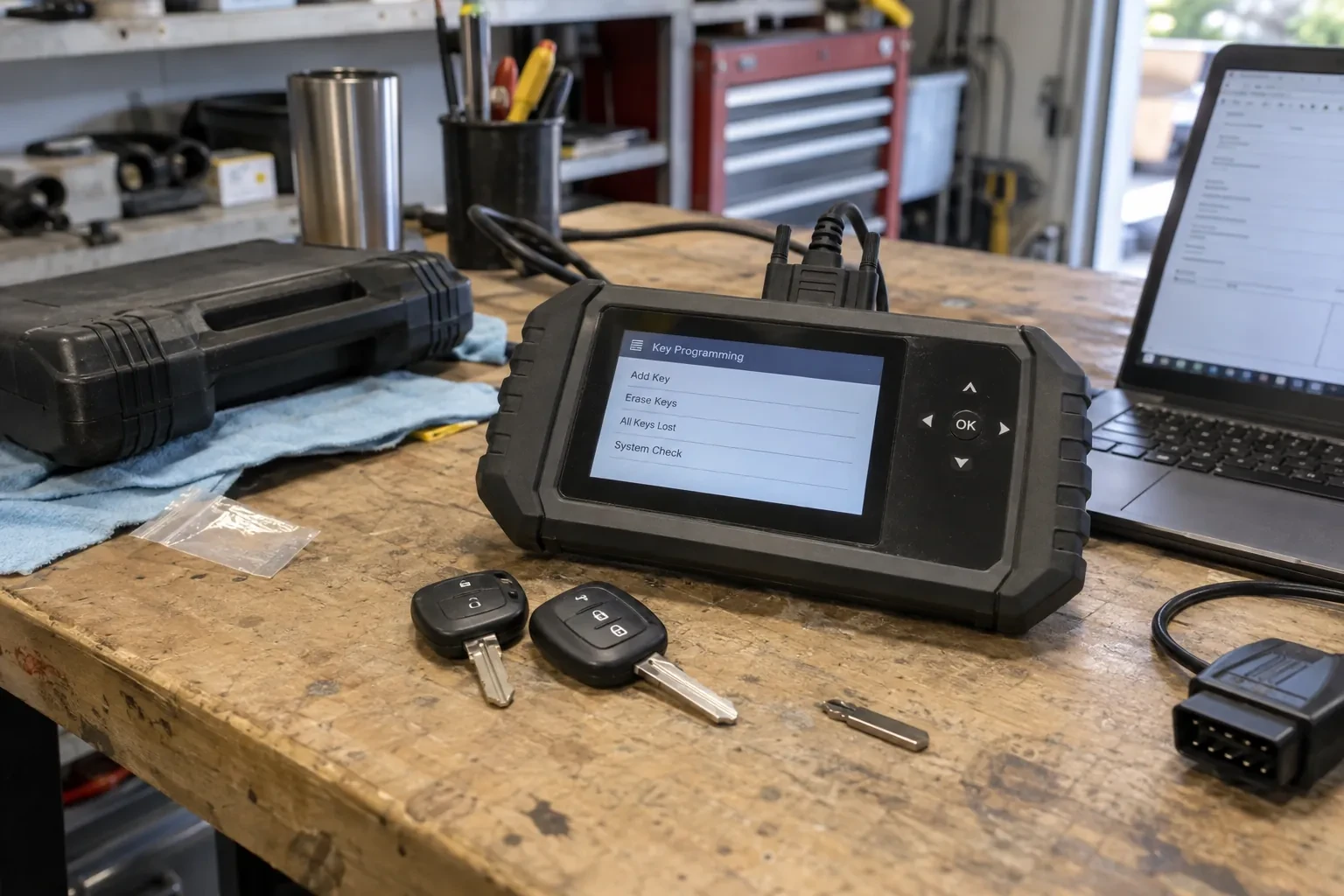
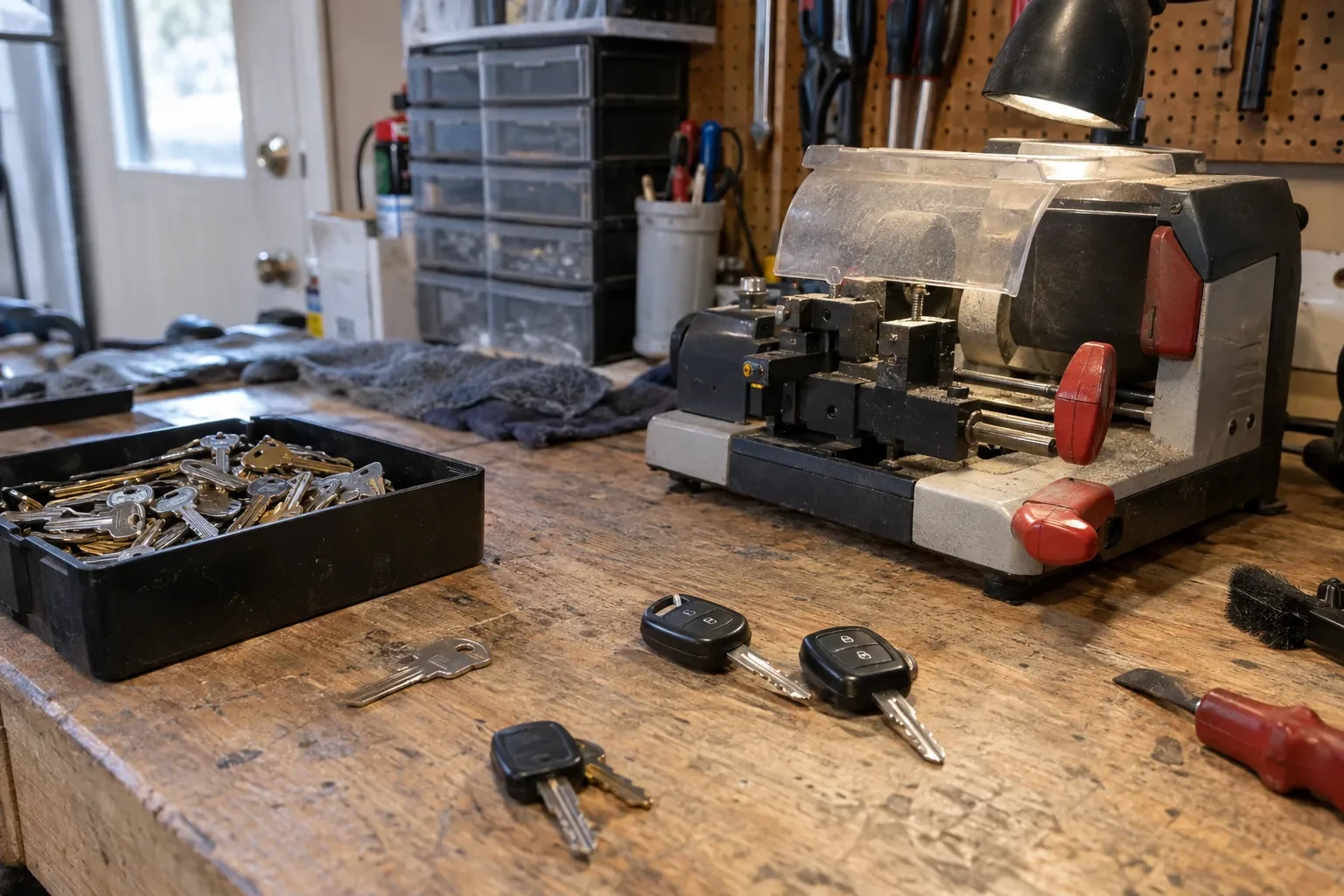
Most replacement keys are made where the car is parked. A mobile locksmith carries blanks, a cutting machine and programming equipment in the van, plugs into the diagnostic port and does the work on your driveway, in a parking garage or at the roadside. For most vehicles there is no need to move the car to a shop, and you watch the key cut and tested on the spot; a few systems still need a dealer or an equipped shop, flagged by the VIN check. The locksmith needs the vehicle's identity, proof of ownership, and what the old key could do, so the right parts are on board.
How the visit goesAfter fifteen years the blade has worn to a smooth sliver. It needs a jiggle in the ignition most mornings, this week it took three tries, and a copy cut from that same worn key would only carry the wear forward.
Car Key Replacement
How the visit goes
Proof that the car is yours to key
Before a blank leaves the van, the locksmith confirms that the person asking for a key is entitled to one. Government photo identification is the first piece. The second is a document tying that person to this vehicle: the vehicle permit with the VIN on it, an insurance slip, a lease, or fleet paperwork for a company car. The VIN on the paper is compared with the one stamped on the dash and printed on the door label. A car bought last week and still in the seller's name, an estate vehicle or a family member's car each has its own paper trail, and mentioning it on the phone means the right document is at hand.
Milling a high-security blade
Many vehicles from the last two decades use an internal-cut key, sometimes called a laser-cut or sidewinder key, with a wavy groove milled into the flat of the blade instead of teeth along its edge. These are produced on a milling cutter that follows the code to a fine tolerance, because the wafers in a high-security lock have little forgiveness for an off-depth cut. The blank is clamped, the groove is milled on both sides, the burrs are cleaned off and the blade is checked in the lock for smooth travel. A blade that drags or catches is recut rather than forced.
The missing key is now just metal
If a key was lost or stolen and you chose to have it erased, the car no longer answers to its chip. Whoever finds it holds a blade that may open a door and a fob that can no longer start the engine or, once unpaired, work the locks. The locksmith tells you how many keys the vehicle now recognizes, which should equal the number in your hand. If a stranger holding a working blade still bothers you, the door and ignition locks can be swapped to a new cut, and that is a separate decision you can take with a clear head rather than on the day.
Car Key Replacement
In the van
Decoding pick and lock reader
Transponder key blank
Security PIN or secure-data access
Proximity fob with emergency blade
Remote-head key shell
Car Key Replacement
What affects the quote
Functions on the fob
Locking and unlocking come with every fob. Trunk release, panic, remote start and power liftgate depend on the fob part number, so a fob with more functions is quoted differently from a basic one. Phone-as-a-key is quoted separately, set up through the vehicle's own software rather than by fob choice.
Erasing the keys you no longer hold
Removing lost or stolen keys from the immobilizer during the session is a small extra step, and re-registering the keys you kept follows it. If you want the old keys silenced, say so and it is quoted.
Security data for the vehicle
Some cars give up their programming PIN through the tool; others require the code to be retrieved from manufacturer secure data, which involves a registered request. That step is quoted when the VIN shows it applies.
What to have ready
- Do you have any key that still starts the car, or are they all gone?
- Is there an aftermarket alarm or remote starter fitted to the car?
- How many keys would you like to leave with?
Car Key Replacement: questions
QuestionsWhat is a transponder key, and does my car have one?
A transponder is a small chip in the head of the key with no battery of its own. When the key is in the ignition, or the fob is inside the cabin, the immobilizer sends a signal and the chip answers with a code; if the code is unknown, the engine is prevented from running. Every new light vehicle sold in Canada since September 2007 has been required to have an immobilizer, so almost any car from that time on uses one.
The fob died in the cold. Is that a battery or the key?
Almost always the battery. Coin cells deliver less in deep cold, and a cell that was already weak goes quiet on the first bitter morning. Most cars still start with a flat fob if it is pressed to the start button or laid in a marked slot, and the emergency blade opens the door. Replace the cell, and if the fob stays silent with a fresh one, the remote board or a corroded contact is the next thing to look at.
Which documents count as proof of ownership?
Government photo identification plus the vehicle permit issued by ServiceOntario, the green ownership showing the VIN, is the usual pair. An insurance slip or a lease agreement in your name also works. For a company vehicle, a work order or letter from the fleet manager naming the VIN covers it. If you bought the car days ago, bring the bill of sale and the signed permit until the transfer is done.
Related services
- Spare Car Key DuplicationA teenager just passed a driving test and reasonably wants a key of their own rather than negotiating over the family's single copy every time the car is needed.
- Key Fob ProgrammingEvery fob for the car disappeared at once inside a bag that was never recovered, and the vehicle now sits in the driveway with no way in and no way to start it.
- Transponder Key ProgrammingA second driver has joined the household, and the one existing key gets handed back and forth between two schedules that rarely line up.