High security · Parkway
Safe Installation & Servicing in Parkway
A community group counts the weekend's raffle and bake-sale cash on a kitchen table, then carries it home in a tote bag until the bank opens Monday, because there has never been anywhere safer to leave it.
In plain words
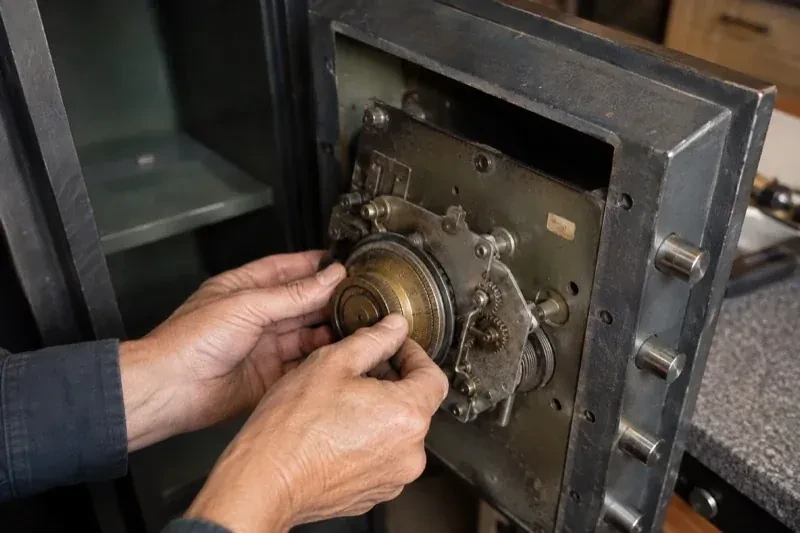
The lock on a safe is either a mechanical dial built around a wheel pack and gates, set and tested by a trained hand, or an electronic keypad running on batteries, and each has its own service needs. A new mechanical lock is set to a combination chosen by the owner and tested through a full open-and-close cycle before installation is called finished. An electronic lock gets fresh batteries, a reprogrammed code, and a check that the low-battery warning actually sounds before it dies. Either way, nobody but the owner leaves with the working combination or code.
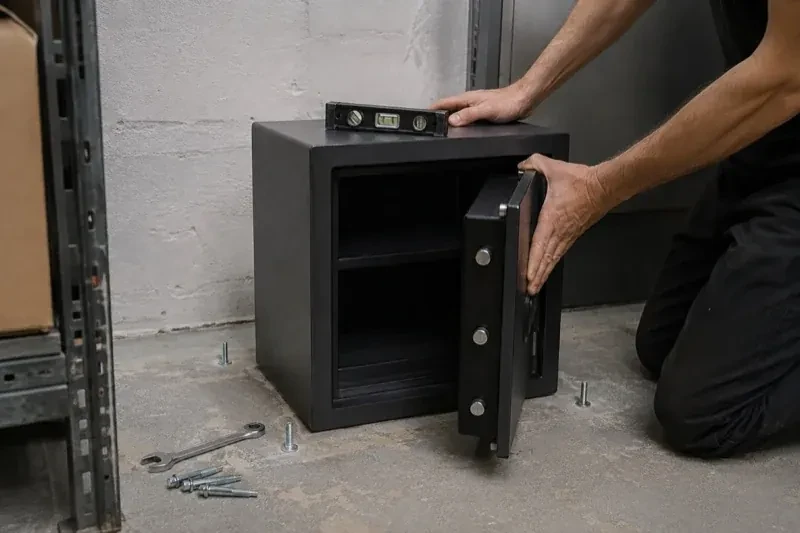
How the visit goesThe office is moving three blocks over, and the old commercial safe that has sat bolted to the concrete for fifteen years now needs to come out, travel across town, and go back down just as solidly.
Safe Installation & Servicing
How the visit goes
What an insurer or head office has specified
Many businesses are told by an insurance policy, a franchise agreement, or a head office what rating a safe on the premises needs to meet before cash or stock is fully covered. The locksmith asks whether any such requirement exists before recommending a unit, because installing a lower-rated safe than a policy calls for can leave a real gap between what the business assumes is protected and what actually is. Where no requirement has been given, the conversation turns to how much is realistically kept on site overnight.
Bringing an existing safe back into full working order
Servicing starts with the bolt-work: the mechanism is opened, cleaned of old grease and grit, and lubricated with a product suited to steel bolt-work rather than a general household oil. The lock is cycled repeatedly and adjusted if it binds or hesitates, and any handle or spindle that has worked loose is tightened. Batteries in an electronic lock are replaced as routine maintenance rather than waiting for a failure, and the door seal and hinges are checked and freed if they have picked up rust.
A schedule for the next visit
A safe does not announce when it needs attention the way a squeaky hinge does, so it helps to put a rough date on the calendar rather than waiting for a sign of trouble. Checking the bolt-work, the batteries, and the door seal every year or two catches small stiffness or corrosion long before it becomes a stuck lock. Businesses with heavier daily use, such as a till safe opened many times a shift, generally benefit from a shorter interval between checks than a document safe opened rarely.
Safe Installation & Servicing
In the van
Rated safe (burglary and fire)
Moving dolly and floor protection
Nine-volt backup battery
Mechanical or electronic lock
Torque wrench and socket set
Safe Installation & Servicing
What affects the quote
Fire rating and duration chosen
A longer fire-rated duration or a lower protected temperature for digital media generally means thicker insulation and a larger overall footprint for the same interior storage space.
Condition of an existing safe
Rust on hinges, stiff or grinding bolt-work, a lock that hesitates, or anchoring that was never done all add work beyond a routine check on a servicing visit.
Number of safes handled in one visit
A single unit is the simplest visit, while a property with a till safe, a document safe, and a smaller personal safe in another room involves more total work in one call-out.
What to have ready
- Do you currently know the combination or code?
- Roughly how much does the safe weigh, if known?
- What will the safe mainly store?
Safe Installation & Servicing: questions
QuestionsWhat kind of floor can a safe be anchored to?
Solid concrete is the most straightforward surface, taking a masonry anchor bolt directly. A wood subfloor works too, provided the anchoring reaches into the floor joists beneath the surface layer rather than just the plywood or the flooring on top. Tile is the awkward case, since a bolt through it tends to crack the surrounding tiles, and an alternative anchoring point or a different spot in the room is usually the better route there.
Do you deliver and move the safe, or do I need to arrange that?
Delivery and the final move into position are part of the service, using equipment suited to the safe's actual weight rather than improvising with furniture dollies or straps meant for lighter loads. The route in is measured ahead of time so doorways, stairs, and tight turns are accounted for before the unit arrives, which avoids a surprise at the one hallway that turns out to be too narrow.
Is a fireproof safe also resistant to a break-in?
Not automatically. Fire resistance comes from an insulated, sealed construction that is not necessarily built to resist tools, while burglary resistance comes from thick steel and hardened plate that is not necessarily built to survive a sustained fire. Some units are built and rated to both standards at once, but a fire-only safe left unrated for burglary should not be assumed to hold up against a determined attempt with tools.