Change or rekey · Parkway
Smart Lock Installation in Parkway
The rental turns over every few months and each time you drive across town to swap keys, then wonder whether copies were made.
In plain words
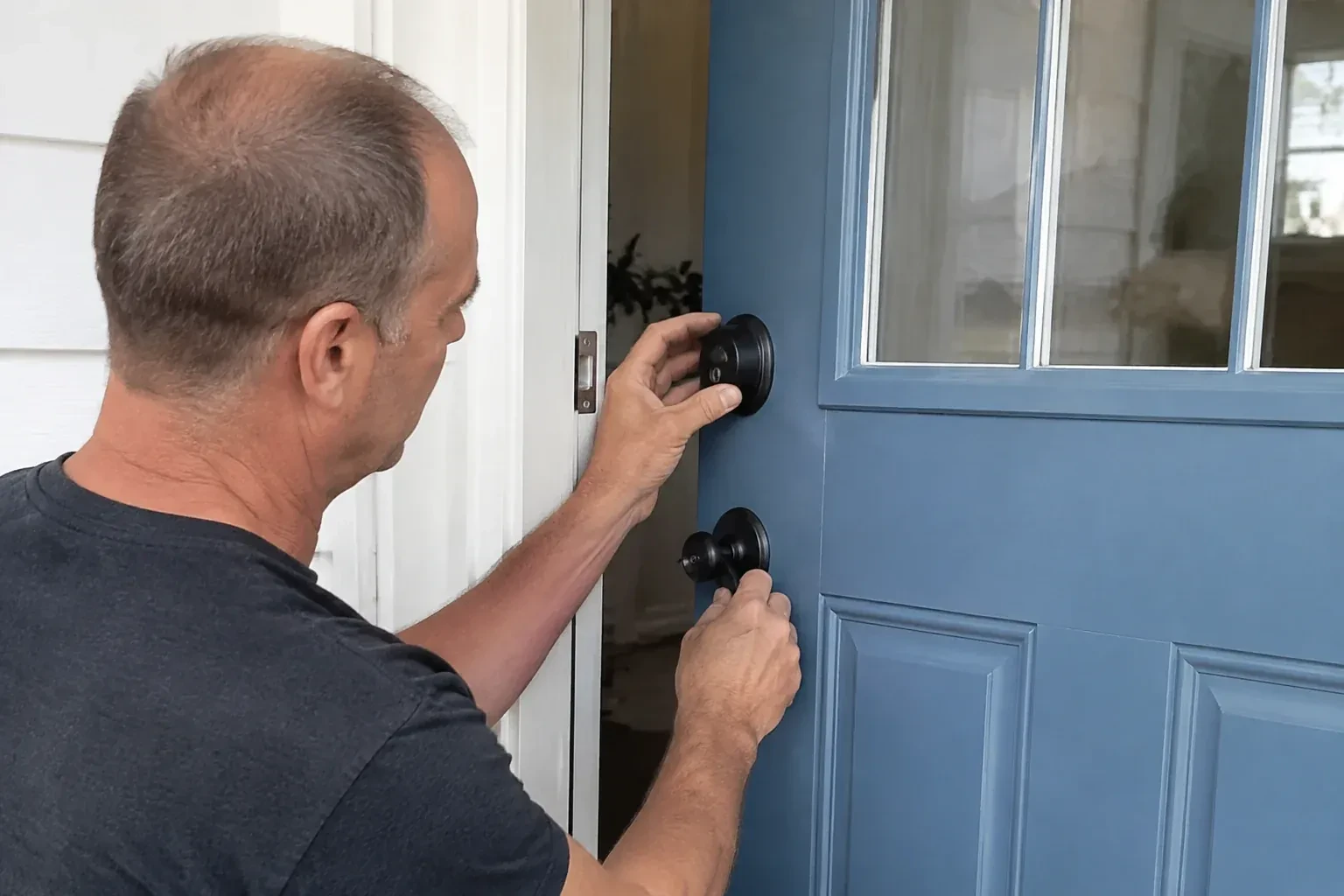
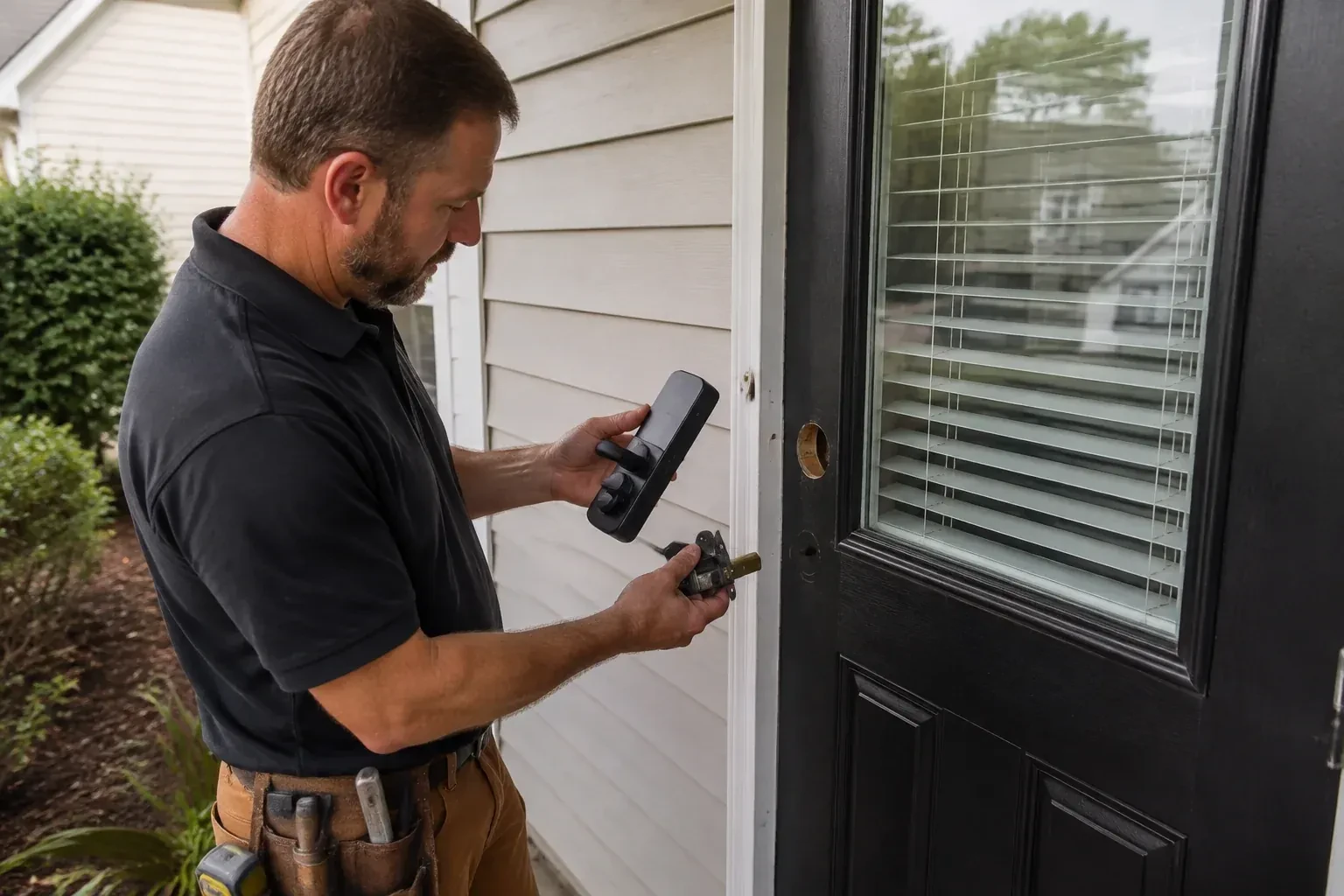
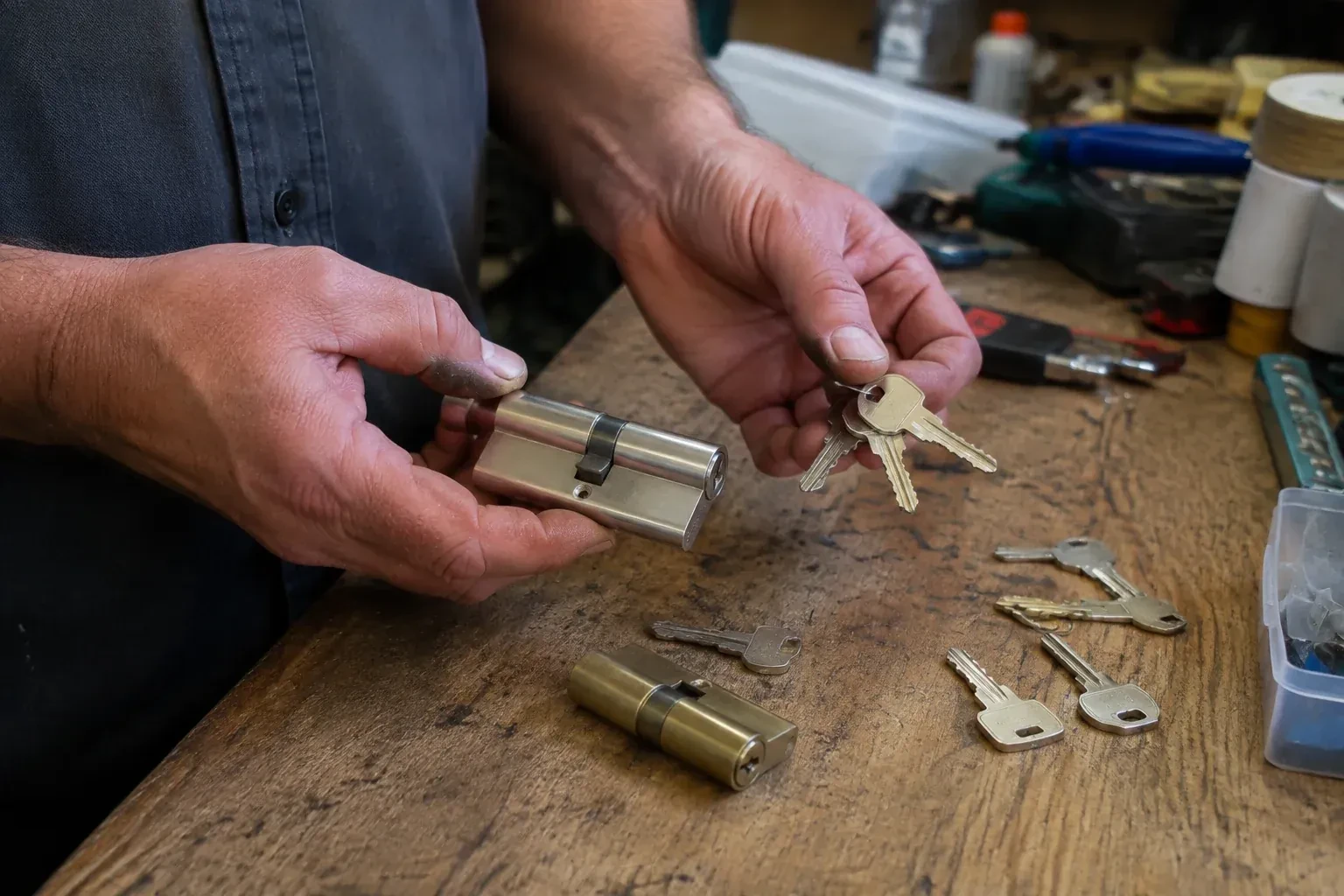
A smart lock fitted by a locksmith keeps a way in that works when the battery or network fails, a mechanical key on many models or an external battery contact on key-free ones. Most keypad deadbolts keep a conventional keyway, rekeyed during the visit so a fresh key operates it and the old one retires. Some models instead add small outside terminals where a nine-volt battery can wake a dead lock long enough to enter a code. The technician tests whichever route the model provides, shows the low-battery warning, and explains what the lock does if the internet goes quiet.
How the visit goesThe rental turns over every few months and each time you drive across town to swap keys, then wonder whether copies were made. A lock with codes you can set and erase from your phone would end that cycle.
Smart Lock Installation
How the visit goes
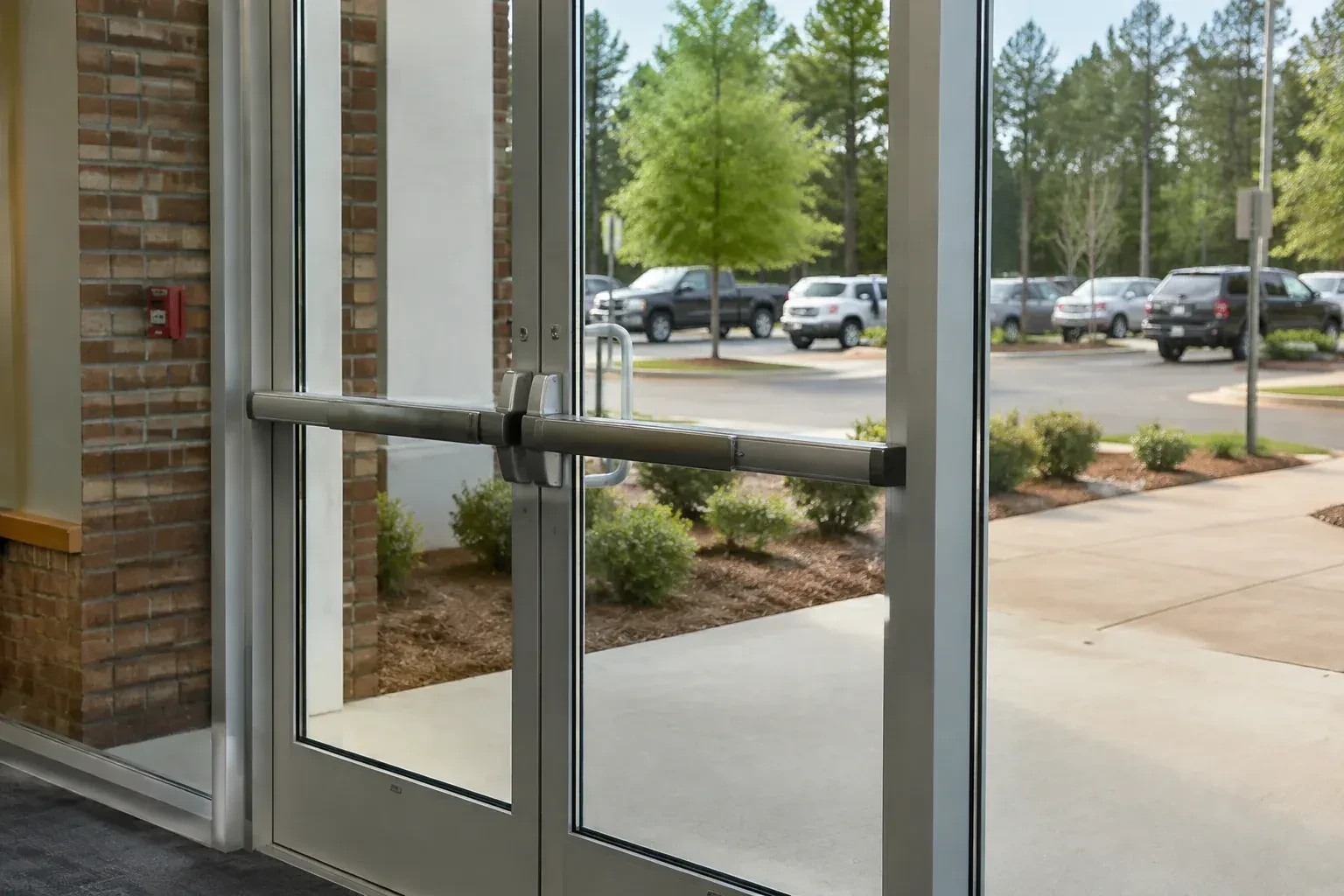
Signal strength at the door
If the lock is to be reached from a phone away from home, the network at the door matters as much as the lock. The locksmith checks how strong the Wi-Fi is on the door itself, not in the hallway, because a metal door, a brick wall or a router at the far end of the house can leave the entrance in a dead spot. Where it is weak, the options are a bridge plugged in near the door, a hub-based model that uses its own radio, or a Bluetooth lock that works locally and skips the network entirely. Finding this out before the box is opened avoids a lock that drops offline every evening.
Testing everything before the van door closes
The last stretch of the visit is all testing, with the door closed as in daily life. Each code is entered and the bolt watched all the way home. The app locks and unlocks the door while the phone sits at the far end of the house, and again from outside the property if the lock is online. The override key is tried in the rekeyed cylinder. The auto-lock is timed. If the model has an emergency power contact, a nine-volt battery is touched to it to prove that route. The storm door is closed to make sure nothing fouls the exterior housing. When every route in and out has behaved, the job is done.
A written record without your secrets in it
The visit closes with a plain note of what was done: the model fitted, the door corrections made, whether the strike was reinforced, which override cylinder was rekeyed and how many keys were cut, and which other doors were brought onto the same key. What the note never contains is a code, a password or a login; those exist only on your account and in your head. For a tenant, that record is the thing to share with a landlord so both sides know what hardware is on the door and that a working way in exists. For an owner, it simply goes in the folder with the house documents.
Smart Lock Installation
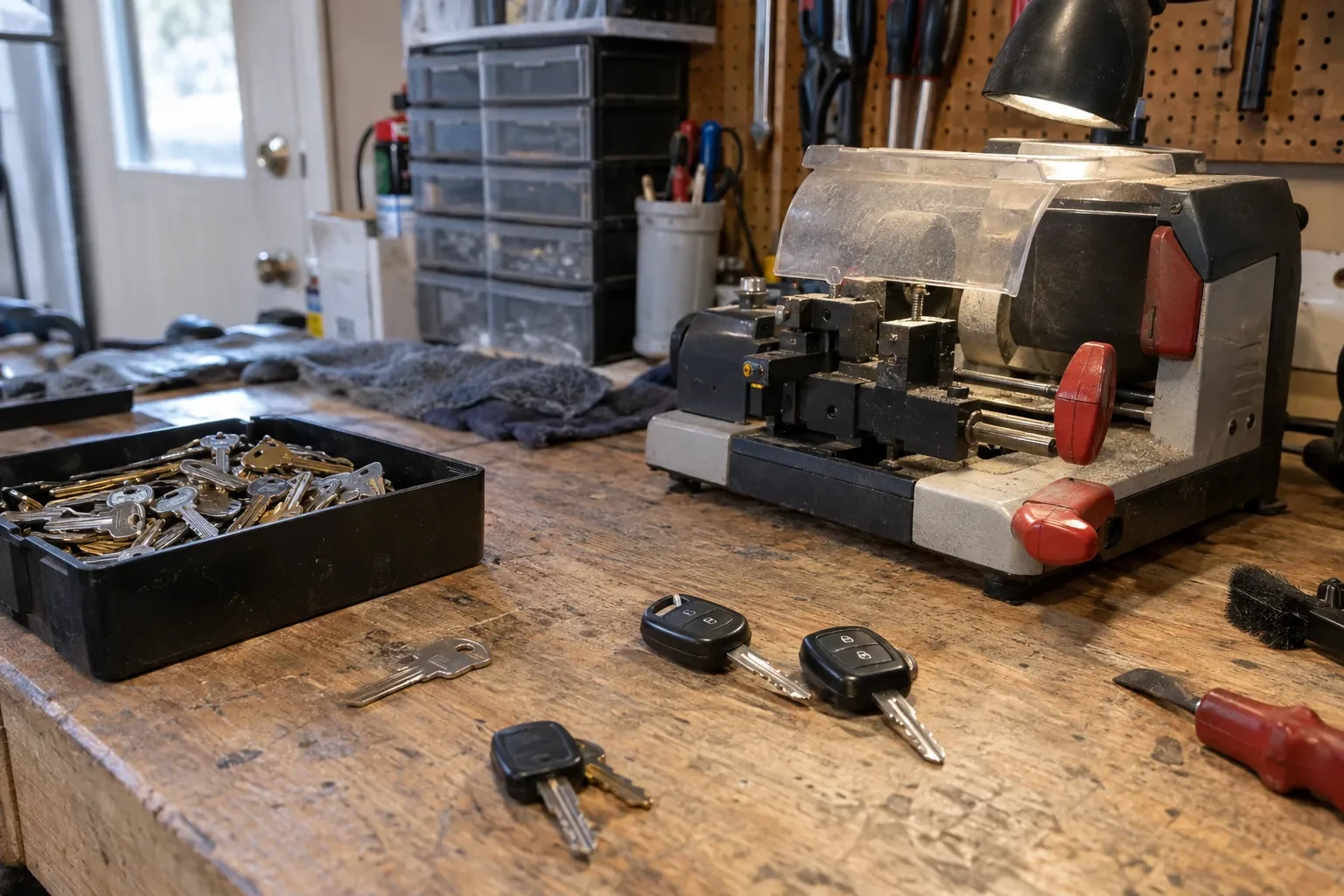
In the van
Smart deadbolt or smart lever set
Hinge shims and long hinge screws
Wi-Fi bridge or home hub
Mechanical override cylinder and repinning kit
Reinforced box strike with long screws
Smart Lock Installation
What affects the quote
Storm door and weather adjustments
Where the entrance calls for a vented storm door panel, a keypad shield or a model rated for heat and cold exposure, those items are named separately so you can choose them or not.
Number of doors
A single front door is the base case. Adding the back door, the garage entry or a side door, whether each gets its own smart lock or is rekeyed to match the override key, extends the visit accordingly.
Retrofit versus full replacement
An interior-only unit that turns your existing deadbolt involves less door work than a complete new deadbolt with a keypad outside, and the two are quoted differently in both hardware and time.
What to have ready
- Which other doors should share the same key or the same system?
- Is there already a keypad or app lock on the door, and who set it up?
- Should the door lock itself after it closes?
Smart Lock Installation: questions
QuestionsWhat is the difference between a keypad lock, a Bluetooth lock and a Wi-Fi lock?
A keypad lock is operated at the door by code and needs no phone at all. A Bluetooth lock adds phone control when you are within a few metres, which covers most daily use and keeps the lock off the internet. A Wi-Fi lock, either built in or through a small bridge, lets you check and change the lock from anywhere and sends alerts, at the cost of more battery use and a dependence on the home network. Many models combine two of these.
Fingerprint, fob, code or phone: which is worth having?
It depends on who uses the door. Codes suit everyone and need nothing in hand. Fobs or cards are a favourite for children and for anyone who finds small buttons difficult, since a tap does it. Fingerprint readers are convenient for a household of adults but can be fussy with cold, wet or gloved hands in winter, so pair them with a code. Phone control is for whoever wants alerts and remote checks. Most families end up using two of these.
Can the lock be set to lock itself?
Most models offer auto-lock, and it is one of the settings the locksmith configures with you. You choose the delay, from a few seconds to several minutes, and the lock throws the bolt on its own once the door has been closed that long. Models with a door sensor wait until the door is actually shut, which avoids the bolt extending into thin air. Families who have ever wondered whether the back door got locked tend to value this most.