
Commercial · Kitchener
Panic & Exit Hardware in Kitchener
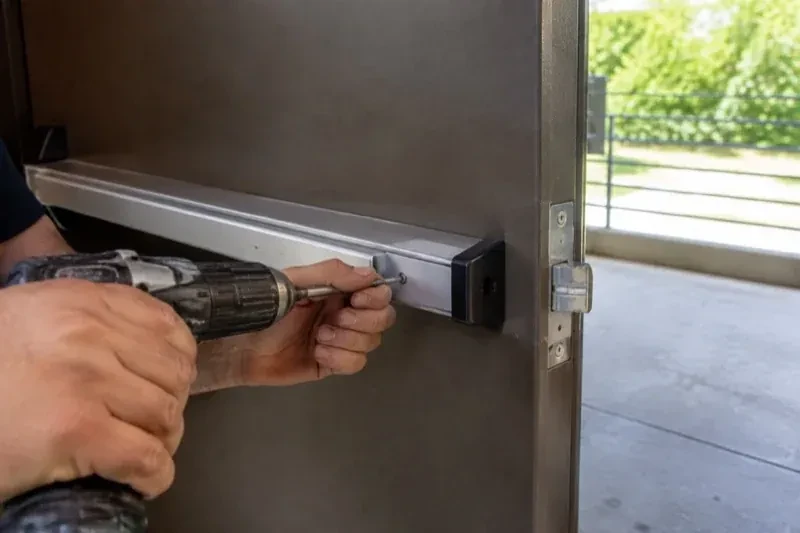
The new access-control reader at the staff entrance works fine going in, but nobody has sorted out the door's exit side, and right now a card reader and a pushbar exist as two separate ideas.
In plain words
A code trigger usually starts the conversation: an occupant load over a threshold, a fire inspector's note, or a new use for a room that used to hold far fewer people. From there the visit works out which openings are affected, what device and trim suit each one, and whether a pair of doors needs a coordinator or a mullion removed. The installation follows a template, and every device is tested for release force and full latch engagement before the visit ends, with a written record of what went on the door for anyone reviewing the space afterward.
How the visit goesThe daycare wants the yard gate and the classroom door alarmed so a staff member hears the moment it opens, without turning either into something a child could be shut behind.
Panic & Exit Hardware
How the visit goes
Is this door part of a pair?
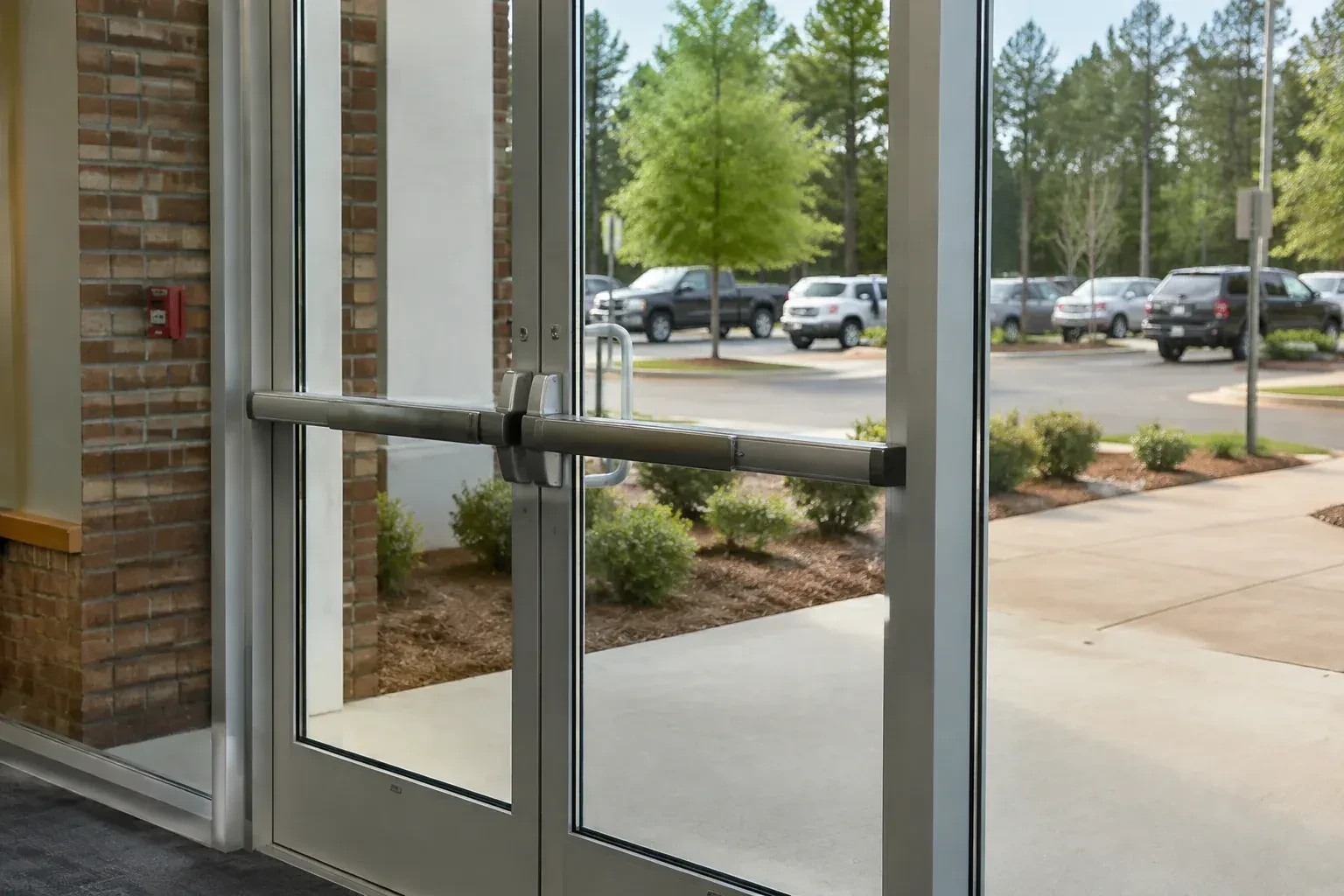
Single doors and pairs get assessed differently from the first look. On a pair, the locksmith checks whether a mullion currently splits the opening, whether a coordinator is already fitted, and whether the leaves close independently or in a set order. This decides whether the project is a straightforward device swap on each leaf or something larger, such as removing a mullion and fitting a compatible replacement latching arrangement to turn two narrow doors into one wide exit. Getting this right at the assessment stage avoids ordering hardware for a single door when the opening is really two leaves working together.
Recording what was fitted
The visit closes with a written account of the work: which device went on which door, its type and rating, the outside trim fitted, any electrified function added, and the tests the assembly passed. This record travels with the building rather than staying in the locksmith's memory, so a fire inspector, an insurer or a new manager reviewing the space later has a clear account of the exit hardware and when it was fitted.
A pair of doors that behaves like one exit
Where a pair was involved, both leaves now latch the way that pair's hardware was designed to: some close in a fixed order guided by a coordinator, with an astragal or a compatible vertical-rod arrangement keeping the opening reading as a single wide exit, while others latch independently on their own without needing either. Anyone walking through it day to day should notice nothing except a door that swings, closes and latches without a hand having to guide the second leaf into place.
Panic & Exit Hardware
In the van
Signage and labels
Outside trim (pull, lever or cylinder)
Through-fixings and mounting hardware
Force gauge
Strike and reinforcement
Panic & Exit Hardware
What affects the quote
Weatherproofing for an exterior opening
An exterior device, strike and trim built to handle temperature swings and moisture cost more as hardware than an equivalent interior-only set, and the quote reflects that difference in the parts themselves.
New preparation or existing cut-outs
A door with no prior hardware needs new holes cut and reinforced to the device's template. A door already prepared for a similar device, even an old one, is often a simpler fit with less new drilling.
Electrified functions added
A request-to-exit switch or electric latch retraction adds wiring, a power source and coordination with the building's other systems, while a standalone alarm module can run on its own battery; each is priced alongside the mechanical installation itself.
What to have ready
- Does any door already have a hasp, padlock or extra deadbolt fitted?
- What is the room's intended use and approximate occupant load?
- Is the existing hardware still working, or does it need replacing outright?
Panic & Exit Hardware: questions
QuestionsHow high should the crossbar or touchpad be mounted?
Exit-device makers publish a mounting range for their own models, and in practice a crossbar or touchpad sits no higher than about 1200 mm above the finished floor. The locksmith sets the hardware inside the maker's range and below that ceiling, allowing for anyone in the space who needs a lower reach, a wheelchair user or a shorter staff member among them.
What is the difference between a rim, mortise and vertical-rod device?
A rim device sits on the surface of the door and suits most single openings, including many tall and fire-rated doors on their own. A mortise device fits into a pocket cut in the door's edge and is chosen where a heavier case or a particular trim style is wanted. A vertical-rod device runs rods to the top, or top and bottom, of the frame, which suits an opening that specifically needs latching at more than one point rather than height by itself.
Can the door be alarmed without making it hard to open?
Yes. An exit alarm module sounds when the device is used, which tells staff a door meant to stay closed has been opened, but it does not add any resistance to the push that releases the latch. The alarm is a notification layer on top of hardware that still opens under one motion, which is why it suits stockroom, dock or perimeter doors where entry through that opening should be rare.
Related services
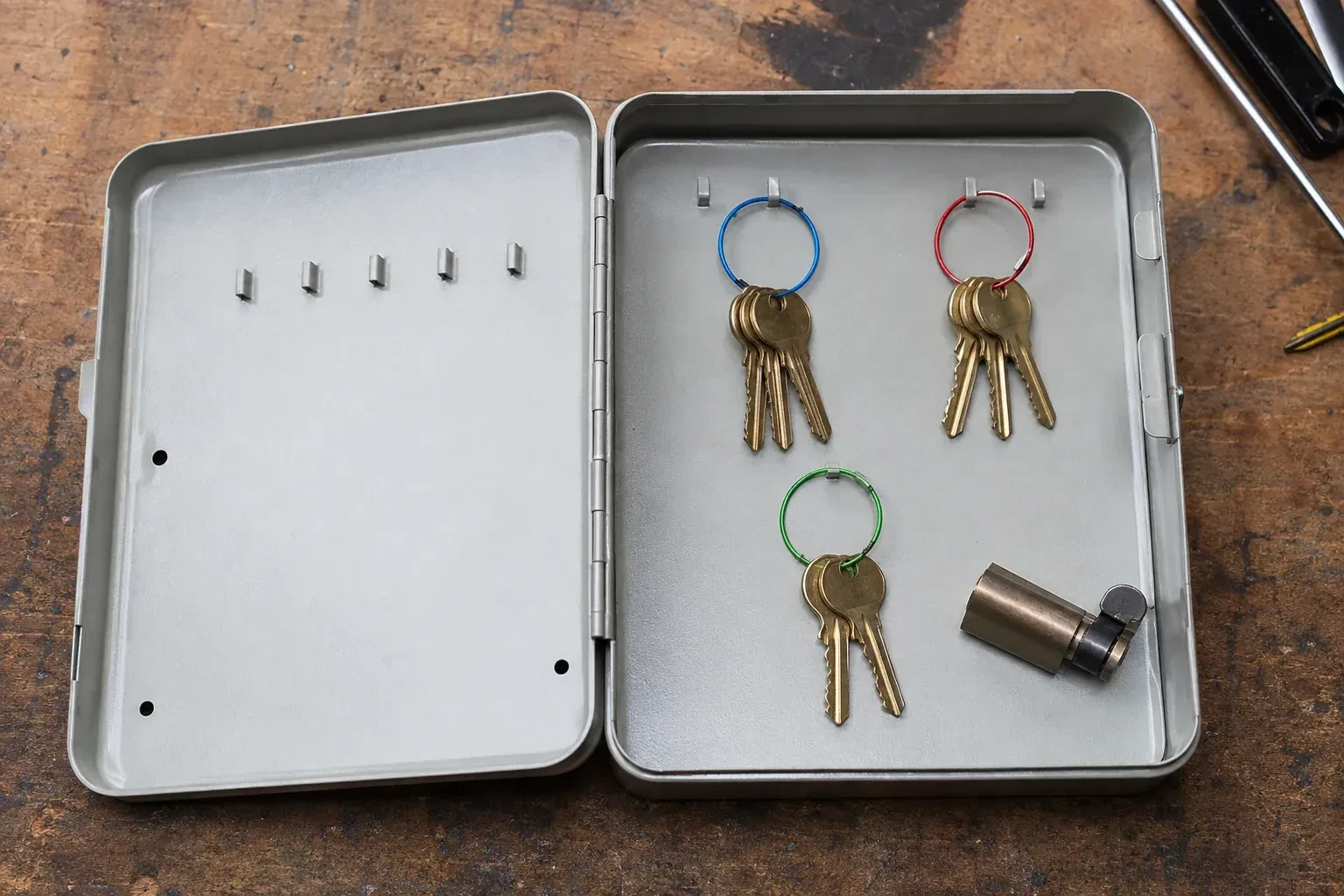
- Master Key System DesignAfter a busy shift the manager counts the keys coming back in and loses track of who still has one.
- Access Control InstallationDeliveries arrive before anyone is scheduled to be there, which right now means either propping the loading dock open at dawn or handing a key to a driver you have never met.
- Commercial-Grade Lock ReplacementAt closing time the hookbolt on the storefront door catches the keeper only on the second or third try, and one employee has started giving the door a shoulder to force it home.